

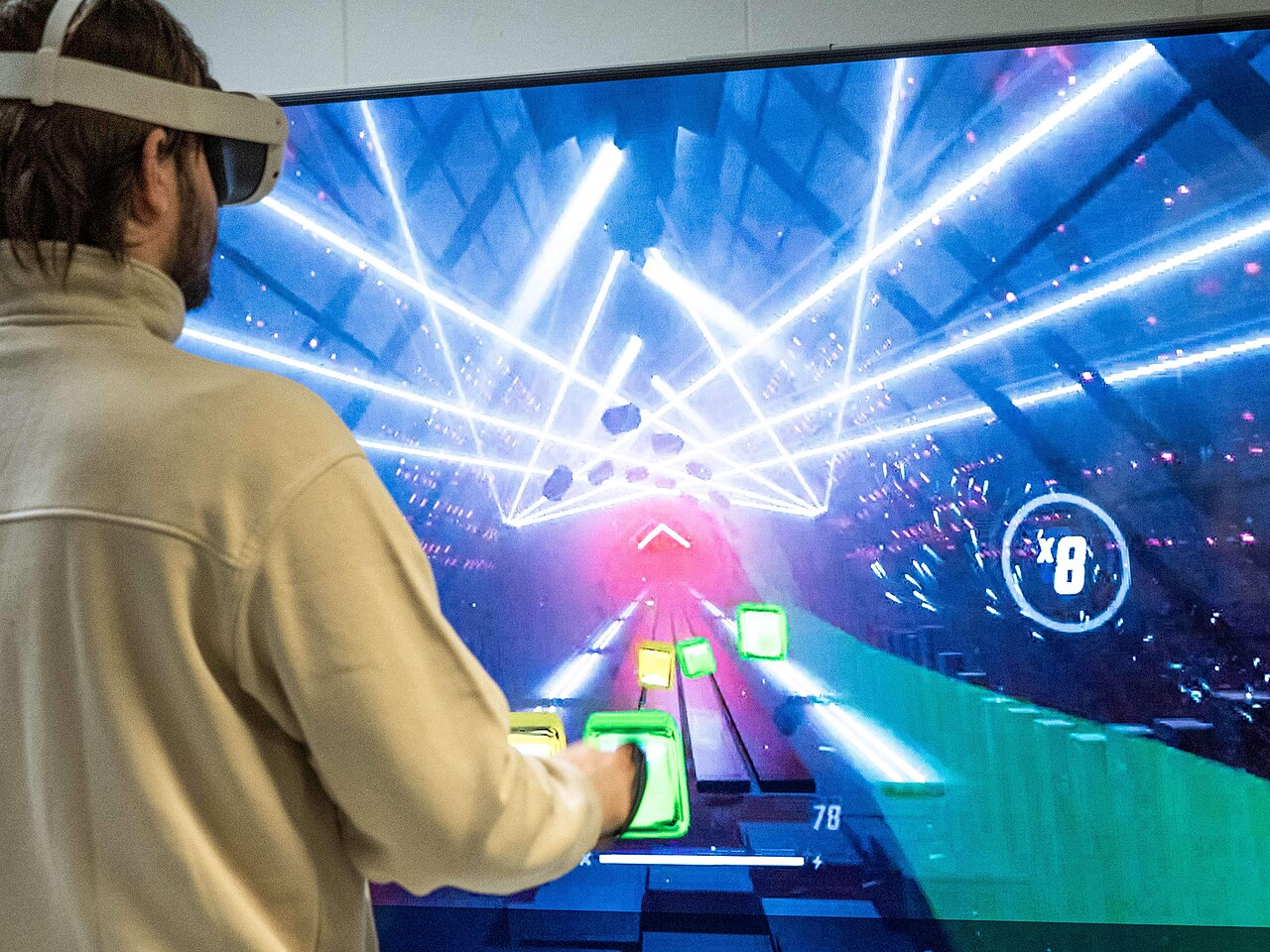
Virtual reality has always had a movement problem. Headsets can render a world of any size, but players live in rooms of finite size, and the gap between those two facts has produced a decade of workarounds — teleporting, thumbstick gliding, and the occasional collision with a coffee table. Virtuix built its business on the most physical solution of all: the Omni One, an omnidirectional treadmill that lets users walk, run and turn in place. Now the company is partnering with Meta to sell the treadmill bundled with Quest headsets, a pairing that puts real locomotion into the same box as the industry’s dominant VR platform.
The bundle matters because distribution has been VR hardware’s quiet killer. Standalone accessories, however clever, struggle to reach buyers who must discover, evaluate and purchase them separately. A bundle sold alongside the headset a customer already wants collapses that friction. Product details on the treadmill itself are published by Virtuix, while the Quest platform it pairs with is documented by Meta’s Quest pages.
How Walking in Place Actually Works
The Omni One is not a conventional treadmill with a moving belt. The user stands on a low-friction dish, wearing specialised shoes, secured by a support arm and harness that read body movement while keeping the player centred. Slide your feet as if walking and the system translates that into movement through the virtual world; lean, turn and crouch, and the avatar follows. The sensation reviewers consistently describe is not perfect natural walking — it is something closer to skating with intent — but it solves the two problems that thumbsticks never could: motion sickness triggered by visual movement your body does not feel, and the sheer strangeness of gliding through worlds like a camera on rails.
That sickness point deserves emphasis. A substantial share of new VR users report discomfort within their first sessions, and artificial locomotion is the leading cause. When your legs move and your inner ear agrees with your eyes, the conflict that produces nausea largely disappears. If bundled treadmills convert even part of the population that currently abandons VR headsets to a drawer, the addressable market for the whole ecosystem grows.
The Fitness Angle Is Not a Gimmick
Virtuix has leaned into exercise from the start, and the logic is sound. A player who physically walks through a game session is doing low-impact cardio whether they call it fitness or not, and the treadmill tracks the numbers — steps, distance, calories — that fitness platforms use to keep people returning. The exergaming market has repeatedly shown that people sustain exercise disguised as play far longer than exercise presented as obligation. A Quest bundle that arrives with both games and a fitness proposition is selling two products in one box.
There are honest obstacles. The treadmill costs real money on top of the headset, needs dedicated floor space in homes that may not have it, and its game catalogue — titles built or adapted for omnidirectional movement — remains smaller than the general Quest library. Bundling addresses discovery and price perception; it cannot manufacture space in a small apartment. The realistic early market is enthusiasts, fitness-motivated buyers and location-based venues, with mainstream adoption depending on smaller, cheaper second-generation hardware.
What the Partnership Signals
For Meta, endorsing a locomotion accessory signals that the Quest ecosystem is maturing from a headset business into a platform business, where third-party hardware deepens engagement rather than fragmenting it. For Virtuix, the deal is validation after years of building a category almost alone. And for the industry, the bundle tests a genuine question: was VR’s movement problem a technology problem, or simply a packaging one?
The answer will arrive in sales figures and return rates over the coming year. But the direction is notable — the future of VR is being built not just with better screens, but with better ways to move. More technology coverage is in our Tech section and on the homepage.
