

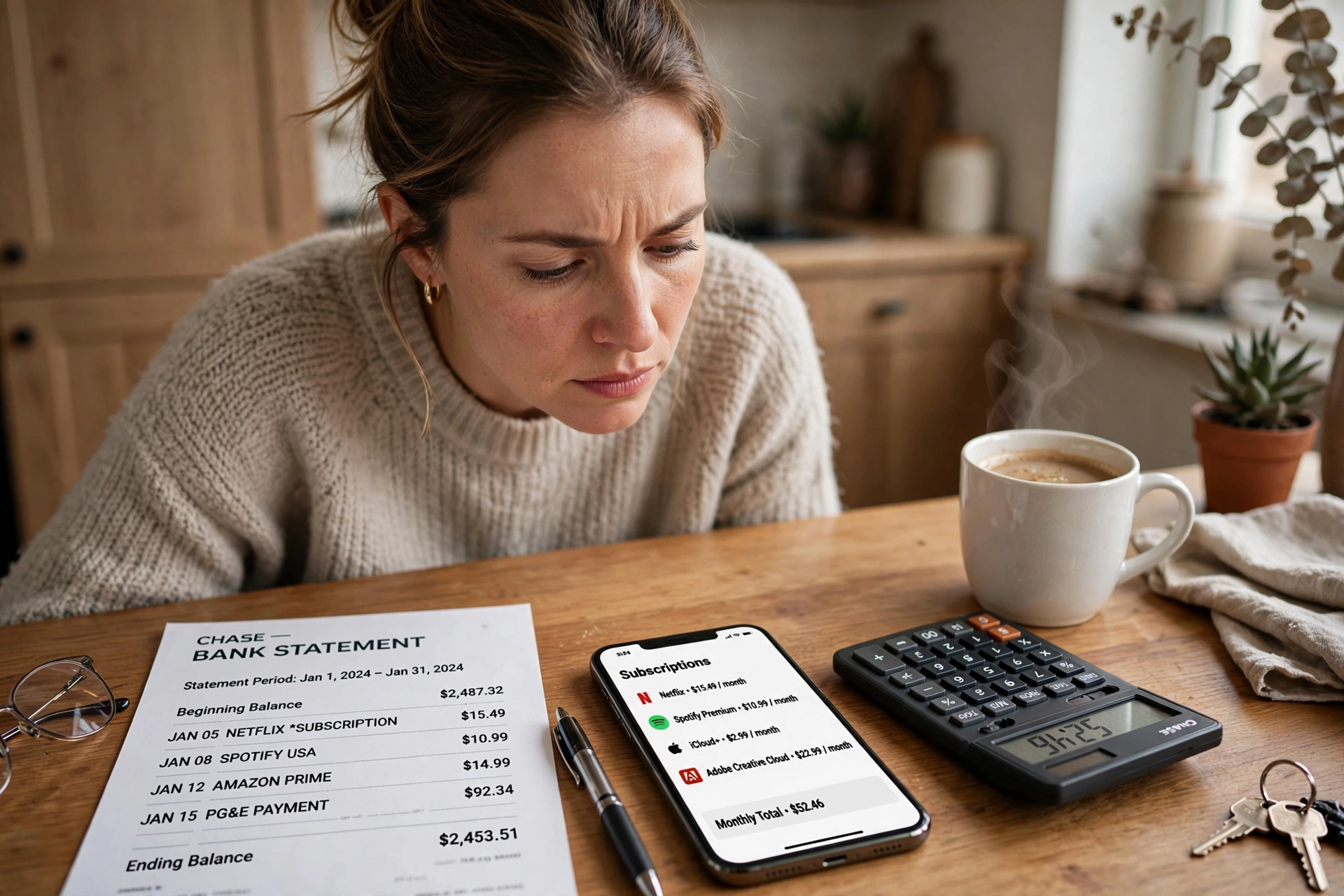
It starts innocently: a streaming service here, a music app there, a cloud storage plan you barely remember approving. Then one day you open your bank statement and count a dozen small charges quietly leaving your account every month. Welcome to subscription fatigue — one of the defining money frustrations of 2026.
How the Small Charges Add Up
Individually, subscriptions look harmless. Nine pounds or twelve dollars feels like nothing. But consumer surveys repeatedly find that people underestimate their total subscription spending by a wide margin, sometimes by half. The average household now pays for streaming, music, gaming, fitness apps, news, delivery memberships and software — often with overlapping features and forgotten free trials still quietly billing away.
The business model depends on this inattention. Companies know that a small recurring charge is rarely worth the effort of cancelling, especially when cancellation is deliberately buried several menus deep. Regulators in several countries have begun pushing for one-click cancellation rules, arguing that signing up and leaving should be equally easy. The US Consumer Financial Protection Bureau has similarly warned consumers about “dark patterns” designed to keep them paying.
The Audit: One Hour That Pays for Itself
The fix begins with an audit. Go through three months of bank and card statements and list every recurring charge, then mark each one as essential, enjoyable or forgotten. The forgotten category is usually the shock — the meditation app from two Januarys ago, the premium tier of a service whose free version would do fine.
People who prefer structured money systems often pair the audit with a simple budget split. A simple budget split, covered in our personal finance guides, explains how to cap the “wants” category — where subscriptions belong — at a level your income can actually sustain.
Rotation Beats Accumulation
One strategy gaining popularity is rotation: instead of holding five streaming services all year, keep one or two and switch every few months. Content libraries do not disappear while you are away, and returning subscribers are often welcomed back with discounts. The same logic applies to fitness apps, news sites and gaming services. Loyalty, in the subscription economy, is rarely rewarded; switching is.
Families can go further by consolidating. Shared and family plans typically cost far less per person than individual ones, and many households discover they are paying twice for the same service under different accounts.
Set Traps for Your Future Self
Because fatigue is a problem of forgetfulness, the best defences are automatic. Put every trial on a calendar with a reminder two days before it converts to a paid plan. Use a separate card or virtual card for subscriptions so they are all visible in one place. Some banks now offer dashboards that flag recurring charges and price increases — a feature worth switching on, since silent price rises are how a £7.99 habit becomes a £12.99 one.
An annual “subscription day” also works: one fixed date each year when every recurring payment must justify itself or be cancelled. It takes an hour and, for many households, saves the equivalent of a weekend trip.
Spending With Intention
None of this is an argument against subscriptions themselves. The model offers genuine convenience and value when it matches what you actually use. The problem is drift — the slow accumulation of payments for a life you no longer live. Subscription fatigue is really a signal: your spending has stopped being a choice. The cure is simply to make it one again.
