

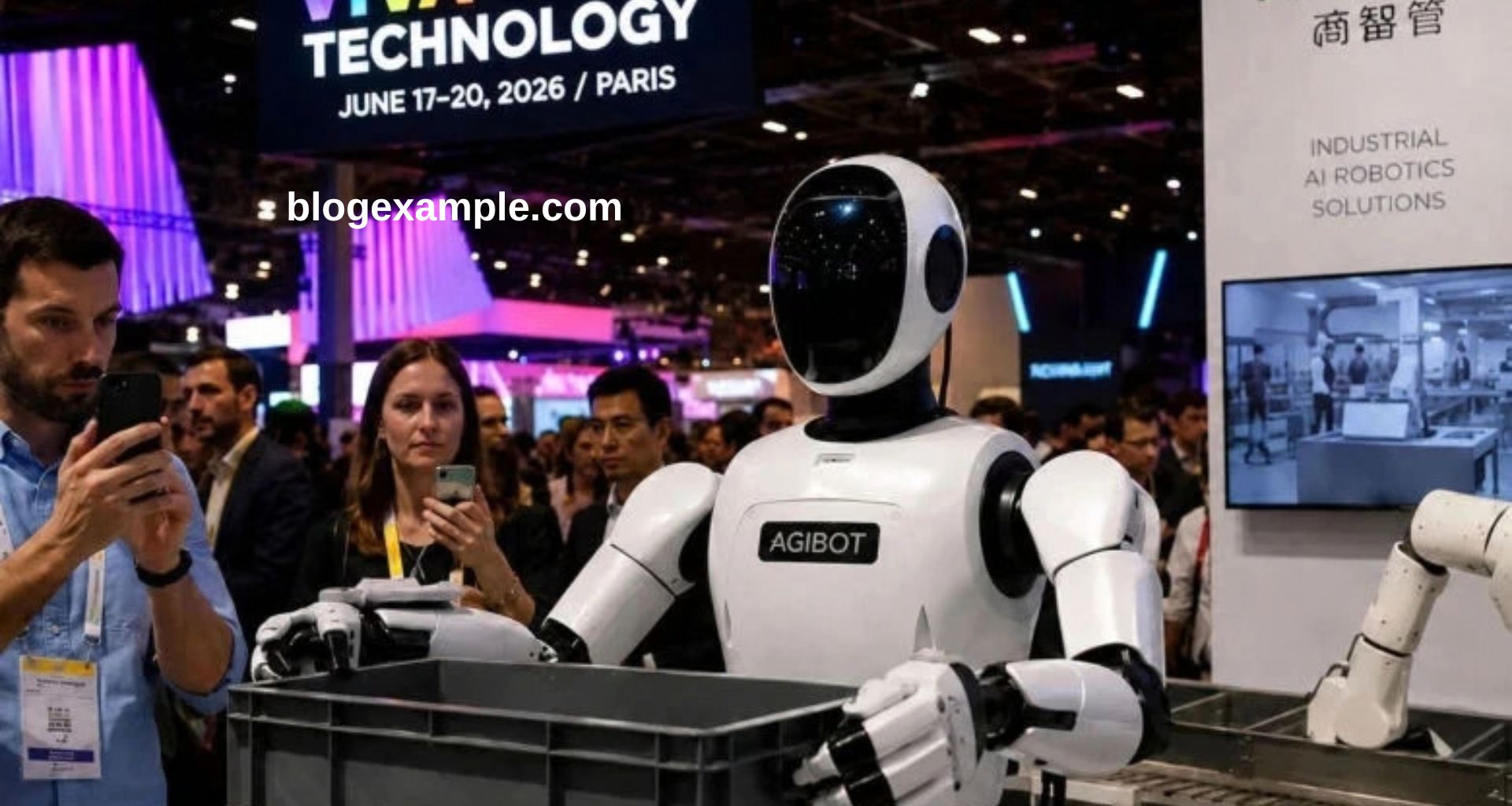
Humanoid robots in 2026 are moving from futuristic demonstrations toward practical applications across factories, warehouses, healthcare, logistics, retail, and research. Advances in artificial intelligence, computer vision, sensors, batteries, actuators, and robotics software are helping machines understand environments, perform physical tasks, and interact with people more naturally.
The latest generation of humanoid robots is designed around a simple idea: machines can work in spaces already built for humans. Stairs, doors, shelves, tools, workstations, and vehicles are all designed around the human body. A robot with a human-like form can potentially operate inside these environments without requiring expensive infrastructure changes. As artificial intelligence becomes more capable, humanoid robots are also gaining better decision-making abilities. Instead of following only fixed instructions, newer systems can interpret surroundings, recognize objects, understand spoken commands, and adapt their movements according to changing situations.
Read More: AI Wearables in 2026: How Smart Devices Are Becoming More Intelligent
What Are Humanoid Robots?
Humanoid robots are machines designed with a body structure that resembles the human form. Most include a head or sensor platform, torso, two arms, two hands, and two legs. Some models are designed primarily for industrial work, while others focus on research, education, healthcare, or human interaction. The human-like structure provides an important advantage. A humanoid robot can potentially use tools, carry objects, open doors, climb stairs, and move through workplaces created for people.
Modern humanoid robots combine mechanical engineering with artificial intelligence. Cameras and other sensors provide information about the environment, while onboard computers process that information and generate actions.
Why Humanoid Robots Are Advancing Quickly in 2026
Several technologies are coming together to accelerate humanoid robotics. Artificial intelligence is one of the biggest drivers. Modern AI models can process language, images, sounds, and environmental information. Robotics developers are increasingly connecting these capabilities with physical machines.
Computer vision is another major development. Robots can identify objects, recognize obstacles, estimate distances, and understand the layout of a workplace. Improved actuators are also important. Electric motors and advanced joint systems allow robots to walk, lift objects, bend, reach, and maintain balance with greater precision.
Battery technology continues to influence robot performance. Longer operating time means robots can complete more tasks before returning to a charging station. Another important improvement is simulation. Developers can train robots in virtual environments before deploying them in the real world. This can reduce development time and allow robotic systems to learn from thousands or millions of simulated scenarios.
Artificial Intelligence Gives Robots Better Understanding
Traditional industrial robots usually perform predefined movements. Humanoid robots are being developed with a more flexible approach. An AI-powered humanoid system can potentially receive an instruction such as moving an object from one location to another, identify the object, determine a suitable path, grasp it, and transport it. This requires multiple technologies working together.
Large AI models can help robots understand language. Vision systems allow robots to interpret surroundings. Motion-planning systems determine how the body should move. Control software then coordinates motors and joints. This combination is helping robotics move toward more adaptable machines.
Humanoid Robots in Manufacturing
Manufacturing is one of the most promising areas for humanoid robots. Factories contain many repetitive physical tasks, including moving components, sorting materials, transferring parts, loading containers, and supplying production lines. A humanoid robot could potentially perform these activities while using existing workspaces and tools.
Another advantage is flexibility. A traditional robotic arm may be excellent at one specific task but require reconfiguration when production changes. A humanoid robot could potentially be retrained through software for different activities. Companies are therefore exploring humanoid robotics for tasks that are repetitive, physically demanding, or difficult to staff consistently.
The goal is not necessarily to replace every human worker. Instead, robots can take over repetitive activities while people focus on supervision, maintenance, quality control, planning, and complex decision-making.
Warehouse and Logistics Applications
Warehouses are another major opportunity. Modern logistics centers require workers to move, sort, pick, carry, and organize products. Humanoid robots could eventually perform some of these physical tasks. A robot with two arms and human-like movement can potentially interact with shelves, boxes, carts, and other equipment without requiring an entirely redesigned facility.
Robots could also operate alongside existing warehouse automation systems. Autonomous mobile robots may transport goods across a warehouse, while humanoid robots handle tasks that require arms and hands. This combination could create more flexible logistics operations.
Humanoid Robots in Healthcare
Healthcare is a more complicated field because safety and reliability are critical. Humanoid robots could potentially support hospitals and care facilities by transporting supplies, delivering items, assisting with routine tasks, and helping staff manage repetitive physical activities.
Socially interactive robots may also assist with communication and basic guidance. For example, a robot could help visitors locate departments or provide simple information. However, healthcare applications require strict testing. A robot working near patients must understand its surroundings and respond safely to unpredictable human movement.
Humanoid robotics could therefore develop gradually in healthcare, beginning with controlled support tasks before moving toward more sensitive applications.
Robots in Homes
The home is one of the most challenging environments for humanoid robots. Factories and warehouses are often organized and predictable. Homes are much less structured. Furniture changes, objects can be left anywhere, people move unpredictably, and different homes have different layouts.
A household robot would need strong vision, manipulation, navigation, language understanding, and safety systems. Potential applications could include organizing objects, carrying items, assisting with household chores, and supporting people with limited mobility.
The biggest challenge is cost. Advanced humanoid robots require sophisticated hardware and software, making widespread household adoption difficult until production becomes more affordable.
Humanoid Robots in Retail
Retail stores could also benefit from humanoid technology. Robots may eventually assist with inventory management, shelf organization, moving products, and basic customer guidance.
Because stores are designed for people, a humanoid robot could navigate aisles and interact with shelves using a familiar physical structure. Retail companies are particularly interested in automation because inventory tasks can consume significant amounts of employee time.
Humanoid robots could perform repetitive work during operating hours or potentially work during periods when stores are closed.
Construction and Dangerous Work
Construction presents another interesting opportunity. Workers regularly perform physically demanding tasks in environments involving heights, heavy materials, dust, heat, and other hazards. Humanoid robots could eventually perform selected activities in dangerous environments, reducing exposure to certain risks.
However, construction sites are highly unpredictable. Robots must deal with uneven surfaces, changing layouts, moving machinery, and complex materials. For this reason, widespread humanoid construction robots are likely to require substantial advances in mobility, perception, and reliability.
Improved Robot Hands and Dexterity
One of the hardest problems in humanoid robotics is creating hands that can manipulate objects as effectively as humans.
Walking is difficult, but picking up an unfamiliar object can be even more challenging. Human hands have remarkable flexibility. Robots need sensors and precise control systems to determine how strongly they should grip an object and how their fingers should move.
In 2026, robotics companies are developing increasingly sophisticated robotic hands with multiple joints and sensors. Better dexterity could unlock many new applications because so many jobs involve manipulating objects rather than simply moving around.
Better Balance and Movement
Humanoid robots also need to walk safely. Human walking involves constant balance adjustments. The body responds to uneven surfaces, obstacles, and changes in direction almost automatically.
Robots need sophisticated control systems to achieve similar stability. Advances in sensors, actuators, motion planning, and AI are improving robotic movement. New systems can analyze body position and adjust movement rapidly.
Future humanoid robots may become capable of walking across more complicated surfaces, climbing stairs, carrying objects, and recovering from unexpected disturbances.
The Role of Training Data
AI-powered robots require enormous amounts of training information. For software AI, data can come from text, images, video, and other digital sources. Physical robots require information about movement and interaction with the physical world. Developers are therefore collecting demonstrations, sensor recordings, simulated experiences, and real-world robot data.
A robot can learn how humans perform a task and use that information to develop its own movement strategies. Simulation is especially useful because developers can expose robots to large numbers of scenarios without risking expensive physical equipment.
Safety Remains a Major Challenge
Humanoid robots will operate close to people, making safety one of the most important requirements.
A robot must recognize humans, understand obstacles, control its strength, and stop when something unexpected happens. Software reliability is equally important. An AI system may understand a command incorrectly or make an inappropriate decision.
Developers therefore need multiple safety layers rather than relying on AI alone. Emergency stopping systems, restricted movement zones, sensor redundancy, human supervision, and extensive testing can all contribute to safer deployment.
Cost and Mass Production
Another major challenge is price. Advanced humanoid robots contain motors, sensors, processors, batteries, cameras, mechanical components, and sophisticated software. Manufacturing these systems at scale is difficult. However, mass production could gradually reduce costs.
As manufacturers improve supply chains and standardize components, humanoid robots may become more affordable. Greater production volumes could also encourage investment in better components and software. The economic model will ultimately determine which applications become commercially successful.
Humanoid Robots and the Future of Jobs
The rise of humanoid robots naturally creates questions about employment. Some repetitive jobs may become increasingly automated. At the same time, new positions could emerge in robotics engineering, maintenance, programming, AI training, safety testing, system supervision, and robot operations.
The impact will likely vary by industry.Jobs involving repetitive physical tasks may experience greater automation pressure, while roles requiring creativity, interpersonal communication, complex judgment, and leadership may remain strongly dependent on people. Education and workforce training will become increasingly important as robotics technology develops.
What Makes 2026 Important for Humanoid Robotics?
The significance of 2026 is not simply that robots are becoming more advanced. The bigger change is the movement from demonstrations toward practical deployment. For years, humanoid robots were primarily research projects. Today, companies are increasingly testing them in realistic industrial and commercial environments.
The combination of generative AI, computer vision, improved hardware, simulation, and robotics software is creating a stronger foundation for useful machines. The technology still has limitations, but progress is becoming increasingly visible.
The Future of Humanoid Robots
The next stage of humanoid robotics will likely focus on reliability, affordability, intelligence, and useful autonomy. Future systems may understand complex instructions, learn new tasks faster, move safely around people, and work for longer periods.
Instead of programming every movement manually, developers may increasingly teach robots through demonstrations or natural-language instructions.
This could make robots easier to deploy across different industries. The long-term vision is not simply to create machines that look human. The real objective is to build versatile physical AI systems capable of performing useful work in human environments.
Frequently Asked Questions
What are humanoid robots in 2026?
Humanoid robots in 2026 are AI-powered machines designed to perform physical tasks in environments created for humans.
Where are humanoid robots being used?
Humanoid robots are being tested and deployed in manufacturing, warehouses, logistics, research, retail, healthcare, and other industries.
How does AI improve humanoid robots?
AI helps humanoid robots understand instructions, recognize objects, interpret surroundings, plan movements, and adapt to changing situations.
Can humanoid robots work alongside humans?
Yes. Many humanoid robots are being developed to safely operate alongside human workers and support repetitive or physically demanding tasks.
Will humanoid robots replace human workers?
Humanoid robots may automate some repetitive tasks, while also creating new opportunities in robotics, maintenance, programming, supervision, and AI development.
What is the biggest challenge for humanoid robots?
Major challenges include safety, cost, battery life, reliable movement, dexterity, artificial intelligence, and the ability to handle unpredictable environments.
Can humanoid robots be used in homes?
Humanoid robots could eventually assist with household tasks, but high costs, safety requirements, and complex home environments remain important challenges.
Why are humanoid robots becoming more advanced?
Progress in AI, computer vision, sensors, robotic hands, actuators, batteries, simulation, and machine learning is accelerating humanoid robot development.
What industries could benefit most from humanoid robots?
Manufacturing, logistics, warehousing, healthcare, retail, construction, and other industries involving repetitive physical work could benefit significantly.
What is the future of humanoid robots?
The future could include more affordable, intelligent, reliable, and versatile robots capable of learning tasks and working safely in human environments.
Conclusion
Humanoid robots in 2026 represent one of the most important developments in modern robotics. Advances in artificial intelligence, sensors, computer vision, actuators, batteries, robotic hands, and simulation are helping machines become more capable and adaptable.
Manufacturing, logistics, healthcare, retail, construction, and household applications all offer potential opportunities. Yet major challenges remain, including cost, safety, energy efficiency, reliability, dexterity, and regulatory requirements.
The technology is still developing, but its direction is clear. Humanoid robots are moving closer to real-world work environments, where their ability to interact with tools, objects, and spaces designed for humans could become a significant advantage.
As AI and robotics continue to converge, humanoid machines may become an increasingly important part of the future workplace. The coming years will reveal how quickly these systems can move from impressive demonstrations to dependable everyday technology.
