

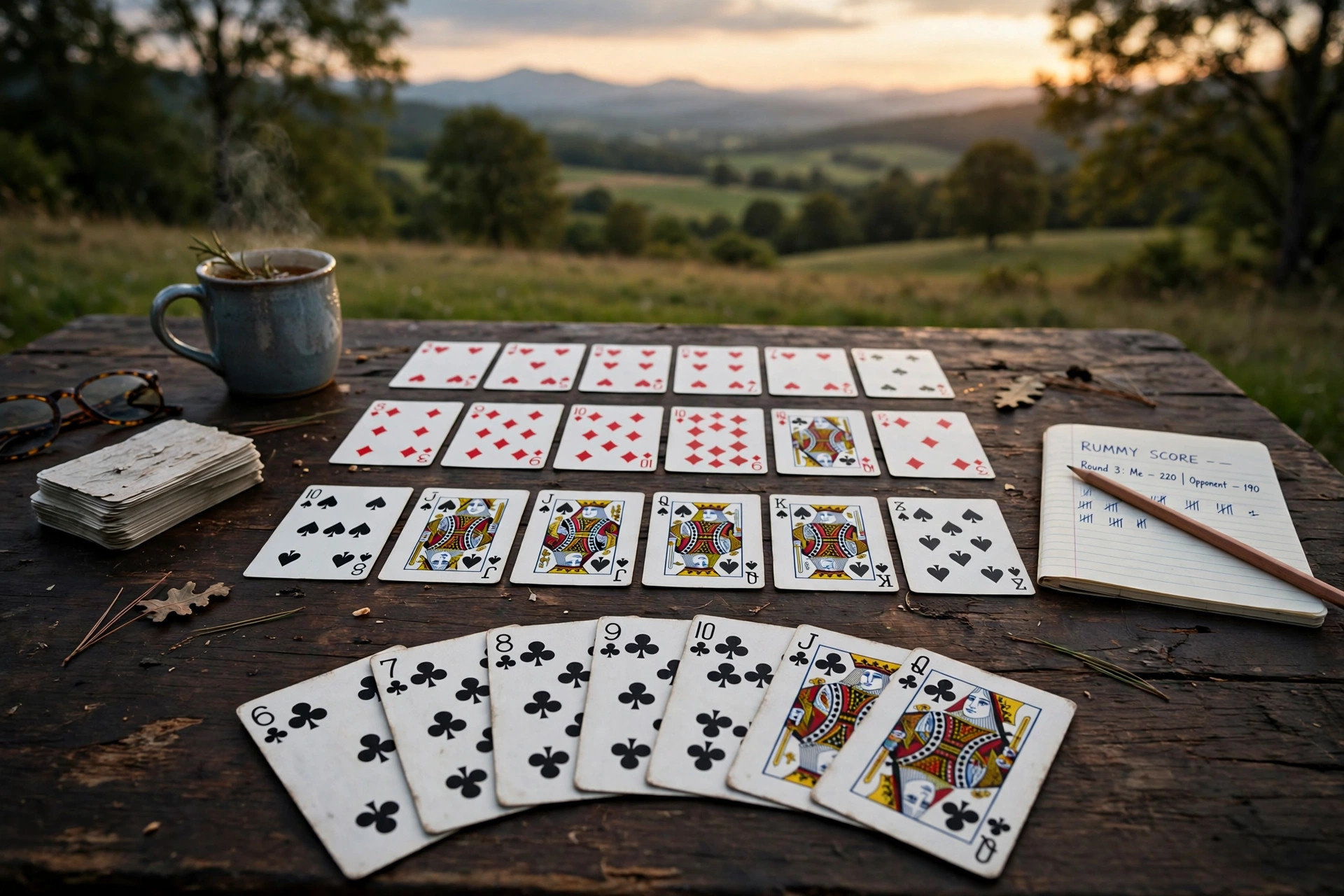
Introduction to the Rummy Game
The rummy game is a popular card game that combines observation, planning, memory, and decision-making. People enjoy rummy in different formats, including traditional card games played with family and friends and free-to-play digital versions. For beginners, learning the basic rules and understanding how to arrange cards into valid combinations is the best way to get started.
If you want to learn more about rummy, explore card-game information, and understand the basics of gameplay, visit All Rummy SS. The website can serve as a starting point for readers interested in discovering more about the rummy game.
This guide explains how rummy works, the meaning of sequences and sets, the role of jokers, common mistakes, and practical tips for improving your understanding of the game.
Link :- https://allrummyss.com
Top Rummy – https://rummy-top.com/
What Is the Rummy Game?
Rummy is a card game in which players arrange cards into specific combinations. The main objective in many versions is to create valid sequences and sets according to the rules of the selected format.
A sequence contains consecutive cards of the same suit. For example, 4♥, 5♥, and 6♥ form a sequence because the cards belong to the same suit and follow a consecutive order.
A set contains cards of the same rank but different suits. For example, 8♠, 8♥, and 8♦ can form a valid set in many standard rummy formats.
Players usually draw a card and discard another during their turns. They must decide which cards to keep, which combinations to develop, and which cards are no longer useful. This process makes rummy an engaging game that rewards careful thinking while still involving an element of chance.
Basic Rules of the Rummy Game
The exact rules can vary depending on the version being played. Indian 13-card rummy is one commonly known format, and its general gameplay includes the following steps.
1. Understand the Cards
A standard deck contains four suits: hearts, diamonds, clubs, and spades. Each suit contains numbered cards and face cards. Depending on the version, one or more decks and jokers may be used.
Before beginning a game, understand the deck, the number of cards dealt to each player, and the rules for valid combinations.
2. Receive Your Cards
In 13-card Indian rummy, each player generally receives 13 cards. Players examine their hands and identify possible sequences and sets.
At the beginning, it is useful to look for cards that are already connected. Three consecutive cards of the same suit may form a sequence, while matching ranks may provide the foundation for a set.
3. Draw a Card
On a typical turn, a player draws one card from either the face-down stock pile or the face-up discard pile, depending on the rules.
The drawn card should be evaluated carefully. It may complete a sequence, help form a set, or have little value to the player’s current plan.
4. Discard a Card
After drawing, a player normally discards one card. Choosing what to discard is an important part of the game.
For example, if you have several unrelated high-value cards that do not contribute to useful combinations, you may need to reconsider your plan. However, always consider whether a discarded card could help an opponent.
5. Form Valid Combinations
The objective is to arrange the required cards into valid combinations. In standard 13-card Indian rummy, a valid declaration generally requires at least two sequences, including at least one pure sequence.
A pure sequence contains consecutive cards of the same suit without using a joker as a substitute. An impure sequence may use a permitted joker to replace a missing card.
Always check the rules of your particular format before declaring a completed hand.
Understanding Sequences in Rummy
Sequences are among the most important concepts for anyone learning the rummy game.
Pure Sequence
A pure sequence contains three or more consecutive cards of the same suit without a joker replacing another card.
Example:
- 3♠
- 4♠
- 5♠
These cards form a pure sequence because they belong to the same suit and appear in consecutive order.
In many versions of 13-card Indian rummy, forming a pure sequence is a mandatory requirement for a valid declaration.
Impure Sequence
An impure sequence contains consecutive cards of the same suit with a joker substituting for a missing card.
Example:
- 6♦
- Joker
- 8♦
If the joker represents 7♦, these cards form an impure sequence under the applicable rules.
Jokers can help complete combinations, but they do not replace the need to understand the specific sequence requirements of the game.
Understanding Sets in Rummy
A set consists of cards of the same rank in different suits.
For example:
- 9♠
- 9♥
- 9♣
These cards form a set because they share the same rank but have different suits.
A useful way to recognize a possible set is to look for repeated ranks in your hand. If you have two cards of the same rank, another suitable card may complete the combination.
Remember that set requirements vary slightly across rummy formats. Follow the rules that apply to your game.
The Importance of Jokers
Jokers are special cards that can make it easier to complete combinations. Depending on the format, a game may use printed jokers, wild jokers, or both.
A wild joker is commonly determined at the beginning of a hand. Cards of the designated rank may then function as wild cards according to the rules.
For example, a joker might substitute for a missing card in a sequence or help complete a set. However, a joker generally cannot be used to satisfy a pure-sequence requirement when it substitutes for another card.
Using jokers thoughtfully can make card arrangement more flexible. Instead of using a joker immediately, consider which incomplete combination would benefit most from it.
Popular Types of Rummy Games
Rummy is played in several formats. Understanding their differences helps beginners choose the version whose rules they want to learn.
Points Rummy
Points rummy is a format in which a hand is scored according to the rules of the particular game. The scoring method and the way a round ends depend on the version being used.
For beginners, a free practice format can be a useful way to understand card combinations without financial pressure.
Pool Rummy
Pool rummy commonly involves several rounds, with players accumulating penalty points. A player may be eliminated after reaching a specified points threshold, such as 101 or 201, depending on the version.
This format requires players to understand not only how to arrange cards but also how scoring works across multiple rounds.
Deals Rummy
Deals rummy is generally played over a fixed number of deals. The rules determine how scores are calculated and how the overall winner is decided.
Because the scoring structure differs from other formats, players should review the rules before starting.
Gin Rummy
Gin rummy is another well-known variation that is often played between two players. Its rules, card arrangements, and scoring system differ from Indian 13-card rummy.
Learning one format at a time is usually easier than trying to memorize every variation simultaneously.
Practical Tips for Beginners
Improving at rummy begins with understanding the rules and making thoughtful decisions. The following tips can help you develop a more organized approach.
Focus on Building a Pure Sequence
When playing a version that requires a pure sequence, identify possible pure sequences early. This helps you understand which cards are most useful and prevents you from overlooking an important requirement.
Keep Your Hand Organized
Arrange your cards mentally or physically into possible sequences, potential sets, and unrelated cards, while following the game’s rules about keeping cards concealed.
An organized hand makes it easier to recognize useful combinations and evaluate new cards.
Review Every Draw
Before keeping a newly drawn card, ask yourself whether it improves your hand. Does it complete a sequence? Does it create a useful pair? Does it offer a better combination than the cards you already hold?
This simple habit can help you make more deliberate decisions.
Discard Carefully
Avoid discarding cards without considering their potential usefulness. A card that seems unnecessary to you may complete an opponent’s combination.
Although you cannot know every opponent’s cards, observing the discard pile can help you make more informed choices.
Learn From Mistakes
Beginners sometimes hold unrelated cards for too long, forget the pure-sequence requirement, or misunderstand the rules for jokers.
After each practice hand, review your decisions. Consider whether you could have formed combinations earlier or avoided keeping unnecessary cards.
Practice With Free Games
Free practice can help you learn the rules, become familiar with the interface of a digital card game, and understand how turns work.
Practice does not guarantee future wins, but it can improve your familiarity with the game’s mechanics.
Common Mistakes to Avoid
Some mistakes occur frequently when people first learn rummy.
Ignoring the pure-sequence requirement: In formats that require a pure sequence, a hand without one may be invalid even if the other cards appear well arranged.
Confusing sets with sequences: A sequence requires consecutive cards of the same suit, while a set generally requires matching ranks in different suits.
Misusing jokers: A joker may help complete a combination, but its permitted uses depend on the rules.
Forgetting to check the final hand: Before declaring, verify that every card belongs to a valid combination and that the required sequences are present.
Playing without understanding the scoring system: Different versions use different scoring methods. Learn the scoring rules before beginning a new format.
Avoiding these mistakes will help you understand the game more clearly and play according to its rules.
Online Rummy and Digital Card Games
Digital technology has made card games accessible through websites and mobile devices. Online rummy interfaces may include virtual cards, automatic sorting, score displays, tutorials, and practice options. Available features depend on the specific platform.
Before using a gaming website, read its terms, privacy policy, age requirements, and applicable local restrictions. Do not assume that every website is official, secure, or legally permitted to offer every type of game.
For educational information about rummy, you can visit https://allrummyss.com. Review the site’s actual content and policies before relying on it for specific rules, services, or claims.
It is also important to distinguish free entertainment from games involving money. Do not deposit money or share sensitive financial information on an unfamiliar website. Never assume that playing skillfully guarantees a particular outcome.
Responsible and Safe Gaming
Rummy should be approached as a recreational card game rather than a method of earning money. Even when a game involves skill, chance can influence the cards a player receives and the results of an individual hand.
Set reasonable limits on the time you spend playing. Avoid chasing losses, borrowing money to continue playing, or allowing a game to interfere with work, study, relationships, or daily responsibilities.
If you prefer a relaxed experience, choose a free version that does not require real-money stakes. Follow the applicable age requirements and local laws, and stop playing whenever the activity becomes stressful or difficult to control.
Why Learning Rummy Can Be Enjoyable
Learning rummy can encourage players to pay attention, recognize patterns, remember discarded cards, and think about different possibilities. Playing socially with family or friends can also create opportunities for conversation and friendly competition.
The most valuable part of learning the game is understanding how its rules work and making decisions based on the cards available to you. Every hand is different, so flexibility and patience are more useful than expecting a guaranteed result.
Beginners should concentrate on the fundamentals before exploring advanced variations. Once the basics become familiar, understanding different scoring systems and combination rules becomes easier.
Frequently Asked Questions About the Rummy Game
What is the main objective of rummy?
The objective in many rummy formats is to arrange cards into valid sequences and sets. In 13-card Indian rummy, a valid declaration generally requires two sequences, including at least one pure sequence.
How many cards are dealt in Indian rummy?
In the commonly played 13-card format, each player receives 13 cards. Other rummy variations may use different numbers of cards.
What is a pure sequence?
A pure sequence is a group of three or more consecutive cards of the same suit without a joker substituting for another card.
Can jokers be used in rummy?
Yes. Many versions allow jokers to substitute for missing cards in certain combinations. Their use depends on the rules, and a joker substituted for another card generally does not count toward a pure sequence.
Is rummy easy for beginners?
The basic rules are relatively straightforward to learn. Becoming comfortable with card combinations, discards, and scoring takes practice.
Where can I learn more about rummy?
You can visit All Rummy SS for a starting point to explore rummy-related information. Check the site’s available guides and verify any specific claims or services independently.
Conclusion
The rummy game is a classic card game that brings together card arrangement, observation, planning, and decision-making. By learning the rules, recognizing valid sequences and sets, understanding jokers, and checking your final hand carefully, beginners can build a solid understanding of the game.
Start with the basic rules of one format, practice without financial pressure, and learn from your mistakes. As you become more familiar with the game, you can explore other variations and their different scoring systems.
For further exploration of rummy-related topics, visit https://allrummyss.com. Always verify the information you read, follow the rules of your chosen format, and keep gaming safe, responsible, and enjoyable.
