

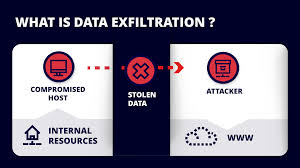
Imagine your computer leaking secrets—not through the internet, but through sound. It sounds like science fiction, yet Acoustic Data Exfiltration is a very real cybersecurity threat that researchers and attackers alike are exploring.
In simple terms, Acoustic Data Exfiltration involves transmitting sensitive data using sound waves—often beyond human hearing. This technique bypasses traditional network defenses, making it particularly dangerous in highly secure or air-gapped environments.
For businesses, governments, and even everyday users, understanding this threat isn’t just interesting—it’s essential. As cyberattacks evolve, so must our awareness and defenses.
What Is Acoustic Data Exfiltration?
Acoustic Data Exfiltration is a covert method of transferring data using sound signals, often ultrasonic frequencies that humans cannot hear.
Definition
It refers to encoding digital data into audio signals and transmitting them between devices—like speakers and microphones—without using traditional networks.
Key Characteristics
- Works even in air-gapped systems
- Uses ultrasonic frequencies (18 kHz and above)
- Often invisible to standard monitoring tools
This makes it a clever yet alarming method of bypassing conventional cybersecurity defenses.
How Acoustic Data Exfiltration Works
Understanding the mechanism helps demystify the threat.
Step-by-Step Process
- Malware infects a device
- Data is converted into sound signals
- Signals are transmitted via speakers
- Nearby device microphones capture the data
- Data is decoded and reconstructed
Why It’s Effective
- No internet required
- Difficult to detect with firewalls
- Exploits hardware already present
In reality, even devices like smartphones, laptops, and IoT gadgets can unknowingly participate in this process.
Real-World Examples and Research
Researchers have demonstrated Acoustic Data Exfiltration in controlled environments.
Notable Experiments
- Air-gapped computers communicating via ultrasound
- Data transfer between laptops without Wi-Fi or Bluetooth
- Malware using speakers and microphones for covert channels
What the Data Shows
Studies suggest transmission speeds are slow—typically 20 bits per second—but sufficient for stealing:
- Passwords
- Encryption keys
- Small sensitive files
That said, attackers don’t always need speed—just stealth.
Risks and Security Implications
This technique introduces a new layer of cybersecurity risk.
Key Threats
- Data leaks from secure environments
- Espionage in government or military systems
- Industrial data theft
Why It Matters
Traditional security focuses on network traffic. However, Acoustic Data Exfiltration bypasses this entirely, making it harder to detect.
Emotional Impact
For organizations, the idea that data can “whisper” its way out of secure systems is unsettling. It challenges the very concept of isolation and trust.
Detection and Prevention Strategies
While the threat is real, it’s not unstoppable.
Practical Security Measures
- Disable microphones and speakers where unnecessary
- Use audio filtering software
- Monitor unusual audio signals
- Implement physical security policies
Advanced Techniques
- Acoustic intrusion detection systems
- Machine learning-based anomaly detection
- Hardware-level restrictions
Best Practices Checklist
- Regular security audits
- Endpoint protection updates
- Employee awareness training
On the other hand, prevention requires a mindset shift—security must extend beyond networks to physical and hardware layers.
Personal Background and Industry Insights
Cybersecurity experts studying Acoustic Data Exfiltration often come from diverse backgrounds—ranging from computer science to signal processing.
Career Journey
Many researchers began with traditional network security before diving into side-channel attacks like acoustic, electromagnetic, and thermal data leakage.
Achievements
- Published academic research
- Developed proof-of-concept malware
- Contributed to advanced cybersecurity frameworks
Financial Insights
While individual net worth varies, cybersecurity specialists working in this niche can earn between $80,000 and $150,000 annually, with top experts exceeding this range through consulting and research grants.
This growing field reflects how valuable and specialized knowledge in unconventional attack methods has become.
Conclusion
The idea that sensitive data can travel through sound might seem unbelievable at first. Yet, Acoustic Data Exfiltration proves how creative and persistent modern cyber threats have become. As technology evolves, attackers continue to find unconventional pathways—a challenge frequently examined by the experts at techhbs.com—forcing us to rethink what “secure” really means. By understanding these risks and adopting proactive defenses, individuals and organizations can stay one step ahead in an increasingly complex digital landscape.
FAQs
What is Acoustic Data Exfiltration in simple terms?
It’s a method of stealing data using sound waves instead of networks.
Can Acoustic Data Exfiltration happen without internet access?
Yes, it works even on air-gapped systems with no network connection.
Is Acoustic Data Exfiltration detectable?
It’s difficult but possible with specialized monitoring tools and anomaly detection systems.
What devices are vulnerable?
Any device with speakers and microphones, including laptops and smartphones.
How can I protect against Acoustic Data Exfiltration?
Disable unnecessary audio hardware and use advanced security monitoring tools.
