

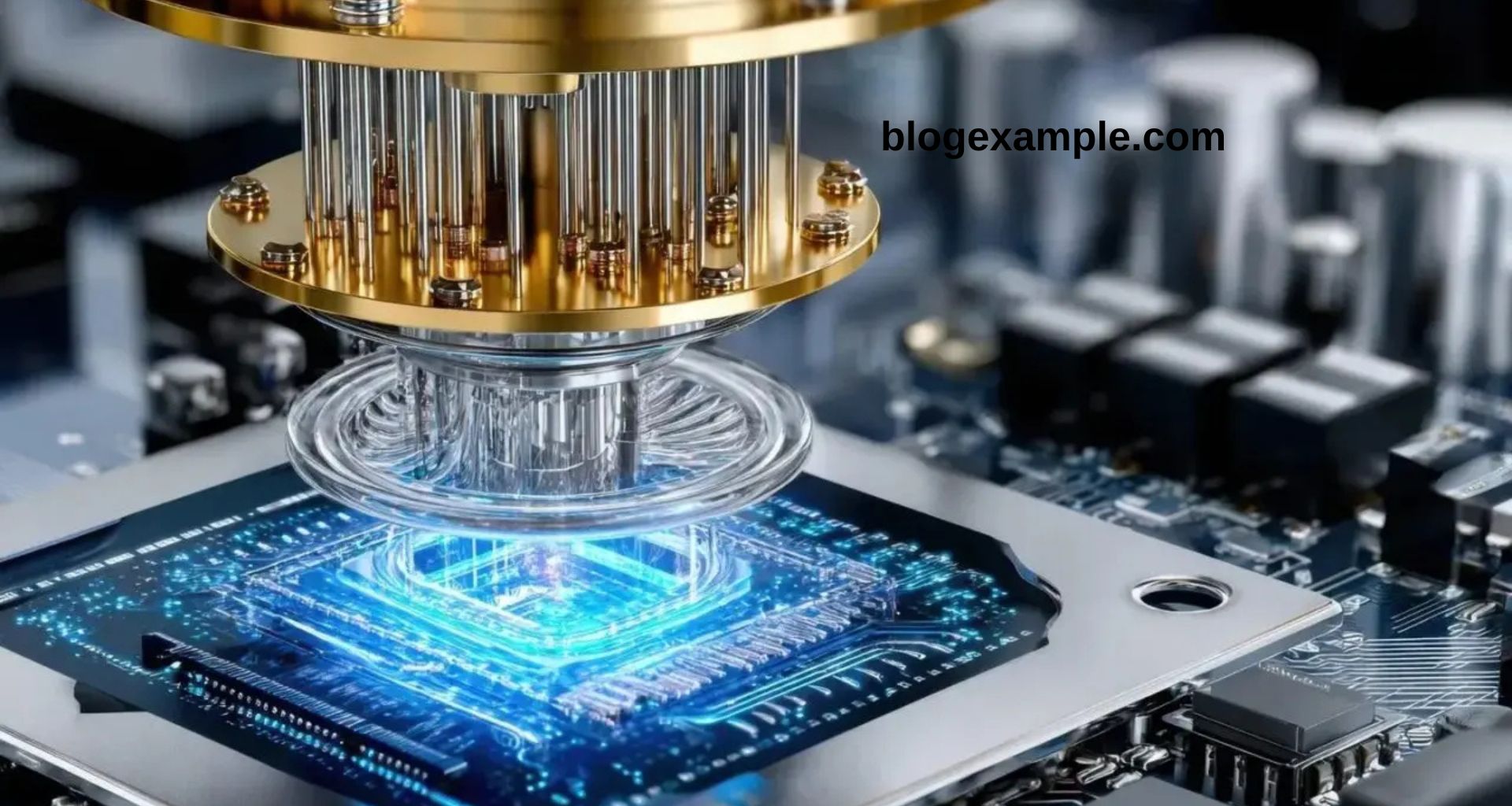
Quantum computing in 2026 is becoming one of the most important developments in modern technology. Researchers, technology companies, and scientific institutions are working to build powerful quantum systems that could solve complex problems beyond the practical reach of traditional computers. From drug discovery and materials science to artificial intelligence and financial modeling, quantum computing is opening new possibilities across multiple industries.
Unlike conventional computers, which process information using binary bits represented by zeros and ones, quantum computers use quantum bits, commonly called qubits. These qubits can take advantage of quantum mechanical properties such as superposition and entanglement to perform certain calculations in fundamentally different ways. Although large-scale, fault-tolerant quantum computing remains a significant technical challenge, research continues to advance. Better qubit designs, improved error correction, new hardware architectures, and growing industry investment are helping move the technology from laboratory experiments toward practical applications. Understanding quantum computing in 2026 requires examining its latest research directions, industry developments, real-world applications, and remaining challenges.
Read More: Quantum Computing in 2026: Latest Breakthroughs and Industry Developments
What Is Quantum Computing?
Quantum computing is an advanced computing approach based on the principles of quantum mechanics. It uses qubits rather than conventional binary bits to represent and process information.
Traditional computers perform calculations through electronic circuits that manipulate bits. Quantum computers use carefully controlled quantum states to carry out specialized operations. When designed for the right problem, these operations can provide significant advantages over classical computing methods. Three important principles form the foundation of quantum computing.
Superposition
Superposition allows a qubit to exist in a combination of possible quantum states until it is measured. This property helps quantum algorithms represent complex mathematical relationships and process information through specialized quantum operations.
However, superposition does not mean that a quantum computer simply evaluates every possible answer simultaneously and automatically produces the correct result. Quantum algorithms must carefully arrange their operations to make useful outcomes more likely.
Quantum Entanglement
Entanglement creates correlations between quantum systems that cannot be explained through ordinary classical relationships. Quantum computers use entangled qubits to support complex calculations and specialized computational processes.
Maintaining entanglement is difficult because quantum states are highly sensitive to environmental disturbances. Researchers are developing improved hardware and control techniques to preserve these states for longer periods.
Quantum Interference
Quantum interference allows quantum algorithms to strengthen certain possible outcomes while reducing others. This principle plays an important role in quantum algorithms designed for particular mathematical and scientific problems.
Together, these properties make quantum computing fundamentally different from traditional computing.
Latest Quantum Computing Breakthroughs in 2026
Quantum computing research is progressing across several important areas. Rather than depending on a single discovery, the industry is advancing through improvements in hardware, error correction, system reliability, and software development.
Progress Toward Fault-Tolerant Quantum Computers
One of the biggest goals in quantum computing is building fault-tolerant systems. Quantum computers are vulnerable to errors caused by environmental noise, imperfect operations, and unwanted interactions between qubits.
These errors can quickly damage calculations, especially when algorithms require thousands or millions of operations. Researchers are addressing this problem through quantum error correction. Instead of relying on a single physical qubit, error-correction systems distribute quantum information across multiple physical qubits to create a more reliable logical qubit. A logical qubit can be protected against certain errors when the hardware and error-correction procedures meet demanding conditions.
In 2026, fault tolerance remains a central research priority. Progress depends on improving error rates, reducing the resources required for error correction, and demonstrating that logical qubits can operate more reliably as systems become larger. Achieving these goals could make quantum computers useful for complex scientific calculations that are currently beyond practical capabilities.
Advances in Quantum Chip Design
Quantum chip development is another major area of innovation. Different research teams are exploring superconducting circuits, trapped ions, neutral atoms, photonic systems, and semiconductor-based qubits. Each approach offers different advantages and engineering challenges. Superconducting quantum processors use electrical circuits cooled to extremely low temperatures. They support fast quantum operations but require sophisticated cooling systems and precise control.
Trapped-ion systems use electrically charged atoms confined and manipulated with electromagnetic fields. They can provide strong qubit connectivity and highly accurate operations, although scaling and operation speed remain important engineering considerations.
Neutral-atom systems use individual atoms controlled with optical techniques. Their potential advantages include flexible arrangements and opportunities to scale the number of qubits. Photonic quantum computing uses particles of light to encode and transmit quantum information. It may support networking and certain specialized computational architectures, but building large, reliable systems remains challenging. No single hardware approach has established universal dominance. Continued experimentation is helping researchers understand which technologies are best suited to different applications.
Better Quantum Error Correction
Quantum error correction is essential for turning experimental devices into dependable computing systems. Unlike ordinary digital information, quantum information cannot be copied freely because of fundamental quantum mechanical restrictions. As a result, protecting qubits requires specialized methods that detect errors without destroying the information being processed.
Researchers are developing more efficient error-correction codes, improved measurement techniques, and control systems that reduce the overhead required for reliable computation.
A particularly important milestone is demonstrating that adding more physical resources can improve the reliability of logical qubits rather than simply introducing additional errors.
Successful error correction could eventually allow quantum processors to perform long calculations with the accuracy required for industrial and scientific use. However, the cost of protecting logical qubits remains a major concern. Large-scale applications may require substantial numbers of physical qubits, along with advanced control electronics and extensive computational infrastructure.
Hybrid Quantum-Classical Computing
Hybrid computing is emerging as a practical approach to developing quantum applications.
In this model, classical computers handle tasks such as data preparation, optimization, control, and result analysis. A quantum processor performs selected operations that may benefit from quantum methods.
This approach is attractive because modern quantum hardware is still limited by noise, scale, and reliability. Rather than replacing conventional computers, quantum systems can operate as specialized accelerators within larger computing environments. Researchers are investigating hybrid methods for molecular simulations, optimization problems, and selected machine-learning experiments.
Nevertheless, a hybrid system does not automatically outperform a classical computer. Its performance depends on the problem, the algorithm, the quality of the quantum hardware, and the communication overhead between quantum and classical components. Demonstrating measurable advantages under realistic conditions remains essential for commercial adoption.
Major Companies Driving Quantum Computing Development
Technology companies are investing in quantum hardware, software, cloud access, and scientific research. Their work is helping create an ecosystem in which businesses and researchers can experiment with quantum technology without necessarily building their own quantum laboratories.
IBM Quantum
IBM is a major participant in superconducting quantum computing. Its research focuses on quantum processors, error correction, system scaling, and software tools. Through its quantum computing platform, IBM provides access to quantum hardware and simulators that researchers can use to develop and test algorithms.
The company’s long-term approach emphasizes building larger systems while improving the quality and reliability of quantum operations. IBM’s progress also highlights an important industry lesson: increasing the number of qubits is not enough. Reliable operations, efficient connectivity, and effective error correction are equally important.
Google Quantum AI
Google Quantum AI focuses on quantum processor development, quantum algorithms, and error-correction research. The company’s work has helped advance discussions about quantum computational performance and the challenges of building reliable quantum systems.
Its research direction emphasizes the importance of reducing errors and developing logical qubits that can support increasingly complex calculations. Google’s broader scientific efforts also demonstrate how quantum computing may contribute to research involving chemistry, physics, and other computationally demanding disciplines.
Microsoft
Microsoft is pursuing a quantum computing strategy that includes quantum software, cloud services, and research into alternative hardware approaches. Azure Quantum provides tools and services for exploring quantum computing technologies and developing applications.
Microsoft also investigates topological approaches to quantum computing, which aim to use special physical properties to improve the protection of quantum information. Topological quantum computing remains a technically demanding research area. Its long-term promise depends on successfully demonstrating reliable hardware and practical computational advantages.
Amazon and AWS
Amazon Web Services supports quantum computing through cloud-based development tools and access to different quantum hardware approaches. Amazon Braket allows researchers and developers to experiment with quantum processors and simulators through a cloud environment.
This model helps reduce the need for organizations to purchase expensive quantum equipment. Developers can test algorithms, compare hardware platforms, and evaluate whether quantum methods may be relevant to their work. Cloud access is particularly valuable during the current research phase because it allows experimentation without requiring every organization to operate a specialized quantum facility.
Nvidia and Quantum-Classical Infrastructure
Nvidia contributes to the quantum computing ecosystem through accelerated classical computing, simulation, and tools that support quantum research. Quantum computers require substantial classical infrastructure for modeling, calibration, control, and data analysis. High-performance computing can also help researchers simulate quantum systems and evaluate algorithms before running them on physical hardware.
This connection between classical and quantum computing is likely to remain important as research systems become more complex. Rather than viewing quantum computing as a replacement for existing processors, the industry increasingly explores how different computing technologies can work together.
How Quantum Computing Could Transform Different Industries
Quantum computing could eventually support applications in industries that depend on complex calculations, advanced scientific modeling, or difficult optimization problems. However, commercial benefits will depend on demonstrating reliable performance and practical advantages over established methods.
Healthcare and Drug Discovery
Drug discovery involves understanding how molecules interact, identifying promising compounds, and predicting how potential treatments behave. Quantum computers could help researchers simulate certain molecular systems more accurately as hardware and algorithms improve. These capabilities may support the investigation of chemical reactions, protein-related processes, and pharmaceutical materials.
Traditional computers already play an essential role in drug discovery. Quantum computing would complement these tools rather than replace laboratory experiments, clinical trials, or established scientific methods.
In the future, useful quantum simulations could help researchers investigate promising compounds more efficiently and improve their understanding of complex chemical interactions.
Financial Services
Financial institutions use advanced computing for risk analysis, portfolio management, fraud detection, and market modeling.
Quantum computing research explores whether specialized algorithms could improve selected optimization and simulation tasks.
For example, quantum approaches may eventually help investigate certain portfolio-allocation problems or complex financial models. Yet many financial optimization problems already have effective classical solutions. Quantum systems must demonstrate clear improvements in speed, accuracy, cost, or solution quality before businesses can justify large investments. For now, financial organizations are mainly exploring potential applications and building expertise rather than relying on quantum computers for routine financial operations.
Artificial Intelligence and Machine Learning
Artificial intelligence depends on powerful computing systems for training models, processing data, and performing inference. Quantum machine learning investigates whether quantum operations can improve selected learning algorithms or represent certain forms of information efficiently.
Researchers are also examining how quantum computing could support scientific AI, optimization, and the analysis of complex physical systems. However, quantum computing is not currently a general replacement for GPUs or conventional AI accelerators. Most practical AI workloads continue to run on classical hardware. The future value of quantum computing in AI will depend on identifying specific tasks where quantum methods provide measurable benefits that outweigh their additional complexity.
Energy and Battery Research
Energy companies and materials researchers are investigating quantum computing for problems involving chemical reactions, catalysts, battery materials, and energy storage. Understanding materials at the atomic level can require sophisticated calculations that become expensive as the systems grow more complex.
Quantum computers may eventually help model selected molecular and material properties more effectively. Potential applications include investigating improved battery chemistry, developing catalysts for industrial processes, and exploring materials for cleaner energy technologies.
These applications remain dependent on advances in hardware reliability, error correction, and computational scale. Even so, materials science is widely considered a promising area for future quantum applications.
Manufacturing and Supply Chain Management
Manufacturing companies manage complicated systems involving transportation, scheduling, inventory, production, and resource allocation. Quantum optimization methods are being investigated for certain problems involving many possible combinations.
Potential applications include optimizing delivery routes, coordinating production schedules, and improving the allocation of limited resources. However, conventional optimization software is already highly developed. Quantum approaches must compete with established algorithms and demonstrate advantages under realistic industrial conditions. Businesses are therefore evaluating quantum optimization carefully rather than assuming it will automatically improve every logistics problem.
Quantum Computing and Cybersecurity
Cybersecurity is one of the most important areas connected to quantum computing. Some future, sufficiently powerful fault-tolerant quantum computers could run algorithms capable of breaking widely used public-key cryptographic systems, including those based on RSA and elliptic-curve cryptography. This possibility does not mean current quantum computers can routinely break modern encryption. The machines required for such attacks would need capabilities far beyond those demonstrated by ordinary research systems.
Nevertheless, organizations are preparing for this long-term risk by adopting post-quantum cryptography.
Post-quantum cryptographic algorithms are designed to resist attacks from both conventional computers and known quantum algorithms. Standards organizations have already published important post-quantum cryptography standards, allowing businesses and governments to begin upgrading their security systems. In 2026, the transition to quantum-resistant security is an important practical development even for organizations that do not use quantum computers directly. Businesses should identify vulnerable cryptographic systems, review third-party dependencies, and develop migration plans for sensitive information that must remain protected for many years.
The Role of Quantum Computing in Cloud Technology
Cloud computing is making quantum technology more accessible to universities, startups, researchers, and established companies. Building a quantum computer requires specialized equipment, environmental controls, advanced engineering, and significant financial resources. Cloud platforms reduce the need for individual organizations to purchase and maintain this infrastructure.
Through cloud services, users can access quantum processors, run simulations, test algorithms, and compare different hardware architectures. This accessibility is encouraging the development of quantum software tools, educational resources, and experimental applications.
Cloud platforms also make it easier to combine quantum hardware with classical computing resources. Such integration can support workflows in which conventional systems prepare calculations, quantum processors perform selected operations, and classical software analyzes the results. As the industry matures, improvements in cloud integration and development tools could become just as important as improvements in physical quantum processors.
Challenges Facing Quantum Computing in 2026
Despite continued progress, quantum computing faces several major obstacles.
Hardware Reliability
Quantum states are extremely sensitive to noise and environmental interference. Researchers must improve qubit stability, control accuracy, and operational consistency to support more demanding calculations.
Scaling Quantum Systems
Building a processor with many qubits is not the same as building a useful quantum computer. Large systems also require reliable connections, efficient control mechanisms, and practical error-correction methods.
High Development Costs
Quantum computing laboratories need specialized equipment, skilled engineers, and extensive research resources. These costs can limit access and slow the development of commercial applications.
Limited Practical Advantage
Many quantum algorithms remain experimental or useful only under specific conditions. Businesses need convincing evidence that quantum systems can solve selected problems better than conventional alternatives.
Shortage of Skilled Professionals
Quantum computing combines physics, mathematics, computer science, and engineering. Organizations need specialists who understand both quantum principles and real-world software development.
Universities, research institutions, and technology companies are expanding educational opportunities to address this skills gap.
Quantum Computing Market Trends and Investment
Investment in quantum computing reflects growing interest in advanced computing infrastructure and scientific innovation. Technology companies are funding processor research, quantum software, cloud platforms, and specialized engineering. Governments and research institutions are also supporting quantum science because of its potential economic, scientific, and strategic importance.
Startups are contributing through specialized hardware, control systems, error correction, software development, and application research.
However, investment levels and commercial expectations should be evaluated carefully. Quantum computing remains an emerging field, and individual companies may face technical delays, high operating costs, or difficulties finding sustainable business models. The industry’s long-term growth will depend on measurable technical progress and practical customer demand.
In the near term, opportunities may emerge through cloud access, quantum simulation, research partnerships, specialized software, and cybersecurity modernization. Broader commercial applications are likely to develop gradually as hardware and algorithms improve.
What to Expect From Quantum Computing After 2026
The next stage of quantum computing will likely focus on reliability, scalability, and practical demonstrations rather than qubit counts alone. Researchers will continue working to improve logical qubits, reduce error-correction overhead, and build systems capable of executing increasingly complex algorithms.
More collaboration between quantum computing companies, universities, governments, and industrial organizations may also help accelerate progress. Hybrid quantum-classical computing is likely to remain important because conventional processors are well suited to many everyday computational tasks. Quantum processors will need to demonstrate advantages in selected areas to earn a meaningful place in commercial infrastructure.
Scientific applications may become important testing grounds, particularly in chemistry, materials science, and specialized simulation. At the same time, cybersecurity preparation will continue as organizations upgrade their cryptographic systems to address potential future quantum threats.
The timeline for widespread commercial adoption remains uncertain. Some specialized applications may prove valuable before general-purpose, fault-tolerant quantum computers become available.
Frequently Asked Questions
What is quantum computing in 2026?
Quantum computing is an advanced technology that uses qubits and quantum mechanics to solve specialized computational problems that may be difficult for traditional computers.
What are the latest breakthroughs in quantum computing?
Major research areas include quantum error correction, improved qubit designs, fault-tolerant computing, and hybrid quantum-classical systems.
3. Which companies are leading quantum computing development?
IBM, Google, Microsoft, Amazon, and Nvidia are contributing to quantum computing hardware, software, cloud platforms, or supporting infrastructure.
How can quantum computing benefit different industries?
Quantum computing could support drug discovery, materials science, battery research, financial modeling, manufacturing optimization, and advanced scientific simulations.
Will quantum computers replace traditional computers?
No. Quantum computers are expected to complement traditional computers by handling specialized tasks, while conventional systems remain essential for everyday computing and most current AI workloads.
Conclusion
Quantum computing in 2026 is advancing through improvements in quantum hardware, error correction, software development, and hybrid computing systems. Leading technology companies and research institutions are working to overcome technical limitations and identify applications that could deliver measurable benefits. Healthcare, materials science, energy, finance, manufacturing, and cybersecurity are among the fields exploring the technology’s potential. However, most applications still require further research, and quantum computers have not replaced conventional computing systems.
