

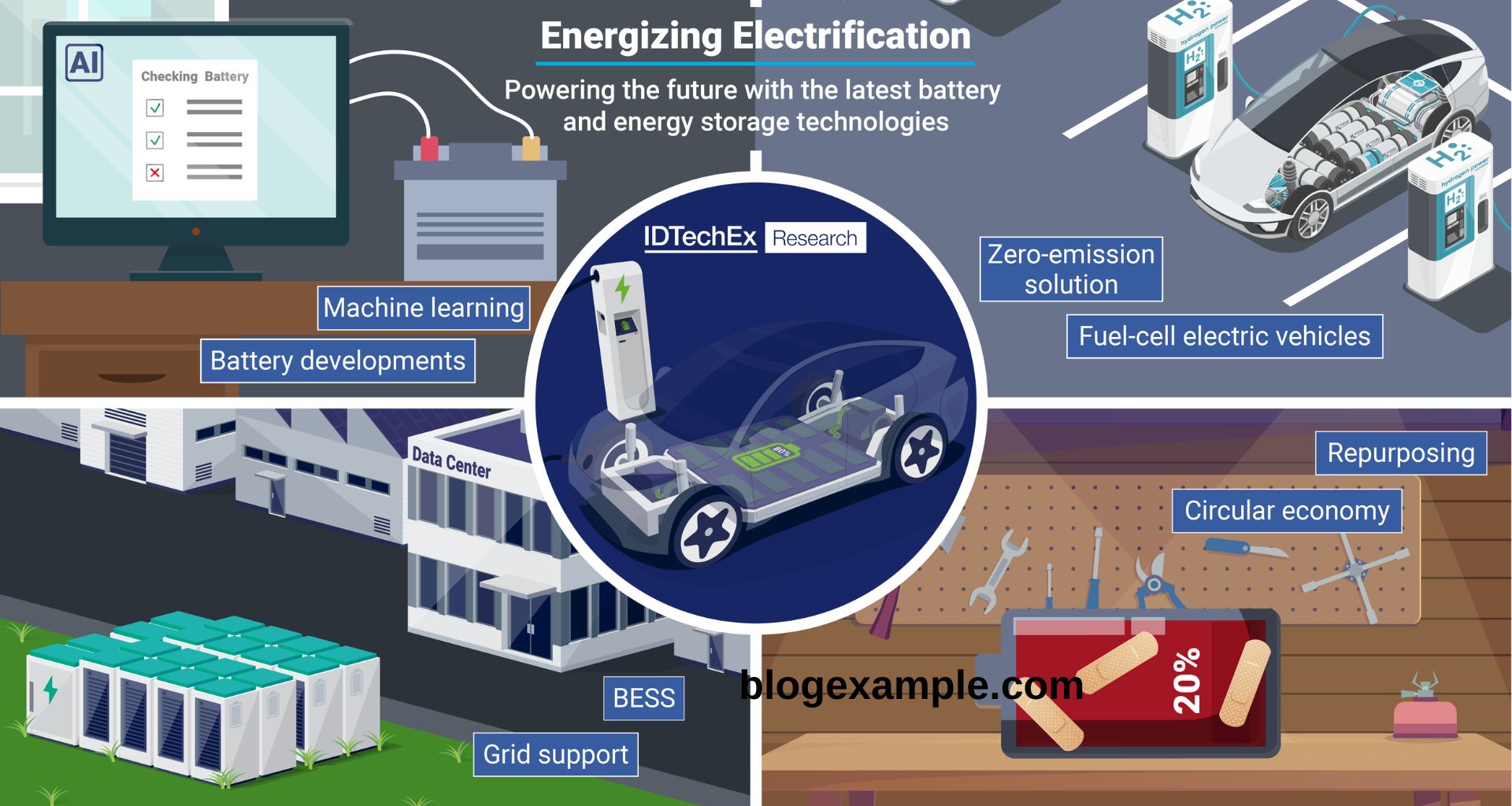
Next-generation battery technology is becoming a major force behind modern technological development. From smartphones and laptops to electric vehicles, smartwatches, and renewable energy systems, batteries play an essential role in powering everyday devices. As technology advances, consumers and businesses demand batteries that charge faster, last longer, deliver better performance, and offer improved safety. Traditional lithium-ion batteries have supported the growth of portable electronics and electric transportation for years. However, increasing energy demands, longer operating times, and environmental concerns have encouraged researchers to explore new battery designs and materials.
Innovations such as solid-state batteries, silicon-based anodes, sodium-ion batteries, lithium-sulfur chemistry, and advanced battery management systems could transform how future devices store and use energy. These developments aim to improve battery performance while reducing charging times, manufacturing costs, and environmental impact. Understanding these innovations helps explain why next-generation batteries are becoming an important part of the future technology landscape.
Read More: Smart Glasses in 2026: AI Features, Cameras and Everyday Uses
What Is Next-Generation Battery Technology?
Next-generation battery technology refers to advanced energy storage solutions designed to overcome the limitations of conventional batteries. These technologies focus on increasing energy density, improving charging speed, extending battery life, enhancing safety, and supporting more sustainable manufacturing.
Energy density is one of the most important factors in battery development. It determines how much energy a battery can store relative to its weight or volume. Higher energy density could allow smartphones to operate longer without increasing their size, while electric vehicles could travel farther on a single charge.
Another major goal is faster charging. Consumers increasingly rely on portable devices throughout the day, making charging convenience an important consideration. Future batteries could reduce charging times while maintaining reliable performance over thousands of charging cycles.
Battery manufacturers are also exploring alternatives to expensive or difficult-to-source materials. By improving material efficiency and recycling methods, the industry hopes to create energy storage systems that are more affordable and environmentally responsible.
Solid-State Batteries Could Transform Energy Storage
Solid-state batteries are among the most closely watched innovations in battery research. Unlike conventional lithium-ion batteries that generally use a liquid electrolyte, solid-state designs use a solid electrolyte to transport ions between the electrodes.
This structural difference could provide several important advantages.
Improved Safety
Conventional lithium-ion batteries can experience overheating and thermal runaway under certain conditions. Solid electrolytes may reduce some risks associated with liquid electrolytes, although the overall safety of a battery still depends on its materials, design, and manufacturing quality.
Improved safety could make solid-state technology attractive for electric vehicles, portable electronics, and other applications where reliable energy storage is essential.
Higher Energy Density
Some solid-state battery designs could store more energy in a smaller or lighter package. This development could help manufacturers build electric vehicles with longer driving ranges and portable devices with extended operating times.
Longer-Term Performance Benefits
Researchers are also investigating solid electrolytes that could support lithium-metal anodes. Such designs may offer higher energy density than many conventional battery systems.
Despite these advantages, solid-state batteries face challenges involving manufacturing costs, material stability, interface resistance, and large-scale production. Their commercial adoption will depend on overcoming these obstacles while maintaining consistent quality.
Silicon Anodes Could Deliver Longer Battery Life
Silicon-based anodes represent another promising development in battery technology. Many conventional lithium-ion batteries use graphite in their anodes, but silicon can store substantially more lithium by weight.
Replacing some graphite with silicon could therefore increase a battery’s energy storage capacity without requiring a completely different battery system.
More Energy in Compact Devices
Higher-capacity batteries could benefit smartphones, tablets, wireless headphones, cameras, and laptops. Users may eventually enjoy longer operating times without carrying larger or heavier devices.
Silicon-enhanced batteries could also help electric vehicles achieve better range while making efficient use of available battery space.
Challenges With Silicon Expansion
Silicon expands significantly during charging and contracts during discharge. Repeated expansion can damage battery materials, reduce performance, and shorten service life.
To address these problems, researchers are developing silicon-carbon composites, improved binders, protective coatings, and advanced electrode structures.
Many battery manufacturers are exploring silicon-enhanced anodes because they can potentially improve existing lithium-ion technology without requiring an entirely new manufacturing infrastructure.
Sodium-Ion Batteries Offer a Potentially Affordable Alternative
Sodium-ion batteries are gaining attention as an alternative to lithium-ion systems. They use sodium ions to store and release energy, relying on materials that are widely available in nature.
Lithium remains important for high-energy applications, but its supply chains can be affected by mining costs, geographic concentration, and changing demand. Sodium-ion technology could provide additional flexibility for certain energy storage markets.
Lower Material Costs
Sodium is widely available, which may help reduce dependence on lithium in suitable applications. However, total battery cost also depends on electrode materials, manufacturing processes, energy density, and production scale.
Useful for Energy Storage
Sodium-ion batteries could be particularly valuable for stationary energy storage, where weight and size may be less important than affordability, reliability, and service life.
They may also support selected electric vehicles and portable devices, depending on the battery’s performance characteristics.
Important Limitations
Sodium-ion batteries generally have lower energy density than leading lithium-ion batteries. This limitation can make them less suitable for devices where space and weight are critical.
Nevertheless, sodium-ion technology could complement lithium-ion batteries rather than replace them completely. Different battery chemistries may serve different needs across transportation, consumer electronics, and renewable energy systems.
Lithium-Sulfur Batteries Could Increase Energy Density
Lithium-sulfur batteries are another area of active research. They use sulfur-based cathodes and lithium-containing anodes to achieve potentially high energy density.
Sulfur is relatively abundant and widely available, making it an attractive material for future energy storage systems.
Lightweight Energy Storage
Lithium-sulfur batteries could be useful in applications where reducing weight is especially important. Potential areas include aviation, drones, specialized electric vehicles, and advanced portable electronics.
Their theoretical energy storage potential is higher than that of conventional lithium-ion batteries, although practical performance depends on the complete battery design.
Cost and Sustainability Opportunities
Sulfur can be obtained from established industrial supply chains. In some battery designs, its use could reduce reliance on certain expensive cathode materials.
However, low material cost alone does not guarantee an affordable finished battery. Manufacturing requirements, lithium use, battery life, and recycling must also be considered.
Remaining Technical Barriers
Lithium-sulfur batteries face challenges such as the movement of intermediate sulfur compounds within the battery, changes in electrode volume, and capacity loss during repeated charging.
Researchers are working on improved electrolytes, protective layers, and advanced cathode structures to address these issues.
Commercial success will depend on achieving reliable performance over many charging cycles.
Faster-Charging Batteries Could Change Daily Life
Charging speed is a major consideration for modern electronics. Users expect smartphones, laptops, wireless accessories, and electric vehicles to spend less time connected to a power source.
Next-generation battery development aims to improve charging speed without sacrificing safety or long-term battery health.
Advanced Electrode Materials
New electrode designs can improve how quickly ions move through battery materials. Silicon-enhanced anodes, improved graphite structures, and carefully engineered electrolytes may help support faster charging under suitable conditions.
However, a battery’s charging speed depends on several factors, including its chemistry, temperature, capacity, and internal resistance.
Intelligent Charging Systems
Battery management systems monitor important operating conditions such as temperature, voltage, and current. Advanced systems can adjust charging behavior to protect the battery and improve efficiency.
Smart charging software can also learn usage patterns and limit prolonged charging at high states of charge when appropriate.
Faster Electric Vehicle Charging
Improvements in battery chemistry and thermal management could help electric vehicles recharge more quickly. This would make long-distance travel more convenient and could improve the practical appeal of electric transportation.
However, charging speed also depends on the vehicle’s charging hardware, the charging station, the electrical grid, and battery temperature.
Faster charging will become more useful when these supporting systems develop alongside battery technology.
Artificial Intelligence Is Improving Battery Development
Artificial intelligence is becoming a valuable tool for battery research and manufacturing. Developing a new battery chemistry traditionally requires extensive laboratory experiments, testing, and performance evaluation.
AI can help researchers analyze large datasets, identify promising materials, and estimate how different chemical combinations may behave.
Discovering Better Materials
Machine learning models can evaluate relationships between material structures and battery performance. This may help researchers identify candidates for improved energy density, durability, conductivity, and safety.
AI does not eliminate the need for laboratory testing, but it can help researchers prioritize promising experiments.
Improving Manufacturing Quality
Battery production requires precise control over material composition, electrode coating, assembly, and other processes.
AI-assisted inspection systems can identify patterns associated with manufacturing defects. Early detection may reduce waste, improve consistency, and support better product quality.
Predicting Battery Health
Advanced monitoring systems can use operating data to estimate battery condition and remaining useful life.
These capabilities may help electric vehicle owners, electronics manufacturers, and energy storage operators maintain batteries more effectively.
As AI tools become more sophisticated, they could shorten parts of the battery development process and improve manufacturing efficiency.
Battery Technology Is Essential for Renewable Energy
Renewable energy sources such as solar and wind produce electricity according to weather conditions and available natural resources. Energy storage helps balance electricity supply and demand when generation changes throughout the day.
Next-generation batteries could support a more reliable and flexible energy system.
Storing Solar and Wind Power
Battery storage systems can capture surplus electricity and release it when demand rises or renewable generation falls.
Improved battery performance could make these systems more efficient and affordable for homes, businesses, and electricity providers.
Supporting Power Grid Stability
Large battery installations can respond quickly to changes in electricity demand. They can help manage short-term fluctuations, support grid operations, and reduce pressure during periods of high demand.
However, different storage technologies serve different purposes. Batteries are useful for many short-duration applications, while other technologies may be better suited to storing energy over longer periods.
Expanding Access to Electricity
Reliable battery systems could also support off-grid communities, backup power installations, and remote facilities.
In areas where electricity supply is inconsistent, affordable storage can help maintain access to essential equipment and services.
The effectiveness of these systems depends on installation costs, local energy conditions, maintenance, and suitable recycling arrangements.
Battery Recycling and Sustainability Are Becoming Priorities
Battery innovation is not only about increasing capacity or reducing charging times. Sustainability is also becoming a central concern as demand for electric vehicles, portable electronics, and energy storage grows.
Battery production requires raw materials, energy, water, and industrial processing. Responsible manufacturing and recycling can help reduce environmental pressures.
Recovering Valuable Materials
Recycling processes can recover materials such as lithium, nickel, cobalt, copper, and other metals from suitable battery types.
Recovered materials may then be used in new products, reducing the need for some newly mined resources.
The economic and environmental benefits depend on collection rates, battery chemistry, processing methods, and the quality of recovered materials.
Designing Batteries for Recycling
Manufacturers can improve recyclability by designing batteries that are easier to disassemble and process.
Clear material labeling, standardized components, and safer collection systems can also support more efficient recycling.
Reducing Environmental Impact
Researchers are investigating alternative materials and manufacturing processes that could reduce environmental costs.
Sodium-ion batteries may offer advantages for certain applications, while longer-lasting batteries could reduce the frequency of replacement.
No battery technology is completely impact-free. The most sustainable option depends on the complete life cycle, including material extraction, manufacturing, use, and end-of-life management.
How Next-Generation Batteries Could Improve Consumer Electronics
Portable electronics are likely to remain an important market for advanced battery research. Consumers increasingly expect their devices to deliver high performance while remaining compact and convenient.
Smartphones
Future smartphones could benefit from higher energy density, improved charging efficiency, and better battery health monitoring.
These improvements could support longer usage between charges while allowing manufacturers to balance performance, weight, and device design.
Laptops and Tablets
Advanced batteries could help laptops and tablets operate longer between charges. This would be valuable for students, remote workers, professionals, and travelers who rely on portable devices throughout the day.
Improved thermal management could also help manufacturers design systems that operate efficiently under demanding workloads.
Wearable Devices
Smartwatches, fitness trackers, wireless earbuds, and health-monitoring wearables have limited space for batteries.
Higher energy density could help these products offer longer operating times without increasing their size. Efficient processors and low-power displays will remain equally important because battery life depends on the entire device, not just its battery.
Smart Home Technology
Smart locks, sensors, security equipment, and other connected devices often need to operate for extended periods with minimal maintenance.
Longer-lasting batteries could reduce replacement frequency and make smart home systems more convenient.
Electric Vehicles Could Benefit From Advanced Battery Chemistry
Electric vehicles are a major driver of battery research. Battery performance affects driving range, charging convenience, vehicle cost, and long-term ownership expenses.
Several next-generation technologies could improve electric transportation. Higher energy density may allow vehicles to travel farther without increasing battery size. Improved durability could help preserve capacity over years of use. More affordable materials could reduce manufacturing costs in selected applications.
Solid-state batteries may eventually offer improvements in energy density and safety, while sodium-ion batteries could provide an option for some lower-cost vehicles or specific operating conditions.
Silicon-enhanced lithium-ion batteries may also improve performance using technologies that build on existing production methods.
However, no single battery chemistry will suit every vehicle. Manufacturers must balance cost, energy density, charging speed, temperature performance, durability, and supply availability.
Battery innovation will also need support from charging networks, electrical infrastructure, and responsible battery recycling.
Challenges Facing Next-Generation Battery Technology
Despite encouraging progress, advanced batteries face several obstacles before they can achieve widespread adoption.
High Development Costs
New battery materials and manufacturing methods can require substantial research investment. Companies must demonstrate that a technology offers practical benefits at a commercially competitive cost.
Manufacturing at Scale
A battery that performs well in a laboratory may be difficult to manufacture consistently in large quantities.
Scaling production requires specialized equipment, reliable material supplies, quality control, and established manufacturing processes.
Durability and Reliability
Battery performance must remain stable across repeated charging cycles and different operating conditions.
Manufacturers need extensive testing to evaluate capacity loss, temperature sensitivity, charging behavior, and long-term reliability.
Raw Material Supply
Some advanced battery chemistries still depend on materials with concentrated supply chains or complicated extraction and processing requirements.
Diversifying material sources, improving recycling, and developing alternative chemistries can help reduce these risks.
Consumer Affordability
Even a technically advanced battery may struggle to gain widespread adoption if it significantly increases the final product price.
Manufacturers must balance innovation with cost, reliability, and practical consumer needs.
What the Future of Battery Technology May Look Like
The future of battery technology will likely involve several complementary solutions rather than one universal replacement for existing batteries. Lithium-ion batteries will continue to serve many applications as manufacturers improve their materials and production processes. Silicon-enhanced anodes may increase energy density, while solid-state designs could create new opportunities for selected high-performance applications.
Sodium-ion batteries may expand in markets where affordability and material availability matter more than maximum energy density. Lithium-sulfur technology could offer advantages for weight-sensitive applications if researchers overcome its durability challenges. AI-powered research and battery management will also become increasingly important. Better material discovery, predictive maintenance, and manufacturing inspection could improve battery performance while reducing waste.
Meanwhile, recycling and second-life applications may help recover value from batteries after they are no longer suitable for their original purpose. The pace of adoption will depend on technical progress, manufacturing investment, safety testing, regulations, and market demand. Some innovations may reach commercial markets sooner than others, while several promising technologies may require years of further development.
Frequently Asked Questions
What is next-generation battery technology?
Next-generation battery technology includes advanced energy storage designs intended to improve energy density, charging speed, durability, safety, and sustainability compared with conventional batteries.
What are solid-state batteries?
Solid-state batteries use a solid electrolyte instead of the liquid electrolyte found in many conventional lithium-ion batteries. They may offer improved energy density and safety, although manufacturing challenges remain.
Will future batteries charge faster?
Many researchers are developing materials and charging systems that could reduce charging times. Actual charging speed will depend on battery chemistry, temperature, device design, and charging equipment.
Are sodium-ion batteries better than lithium-ion batteries?
Neither technology is universally better. Sodium-ion batteries may offer cost and material availability advantages in selected applications, while lithium-ion batteries generally provide higher energy density for many portable and transportation uses.
How could new batteries improve smartphones?
Advanced batteries could provide longer operating times, improved battery health, and potentially faster charging. Device efficiency and software optimization will also influence battery life.
What role does AI play in battery development?
AI can help researchers discover promising materials, analyze test results, detect manufacturing defects, and estimate battery health. Laboratory experiments and real-world testing remain essential.
Conclusion
Next-generation battery technology is helping shape the future of consumer electronics, electric transportation, renewable energy, and intelligent devices. Innovations such as solid-state batteries, silicon-based anodes, sodium-ion chemistry, lithium-sulfur designs, and AI-assisted battery management offer different ways to improve energy storage. These technologies aim to deliver longer operating times, faster charging, improved reliability, and more sustainable material use. However, challenges involving cost, manufacturing, durability, and recycling must be addressed before every innovation becomes widely available.

1 Comment
Pingback: Quantum Computing in 2026: Latest Breakthroughs and Industry Developments - BlogExample