

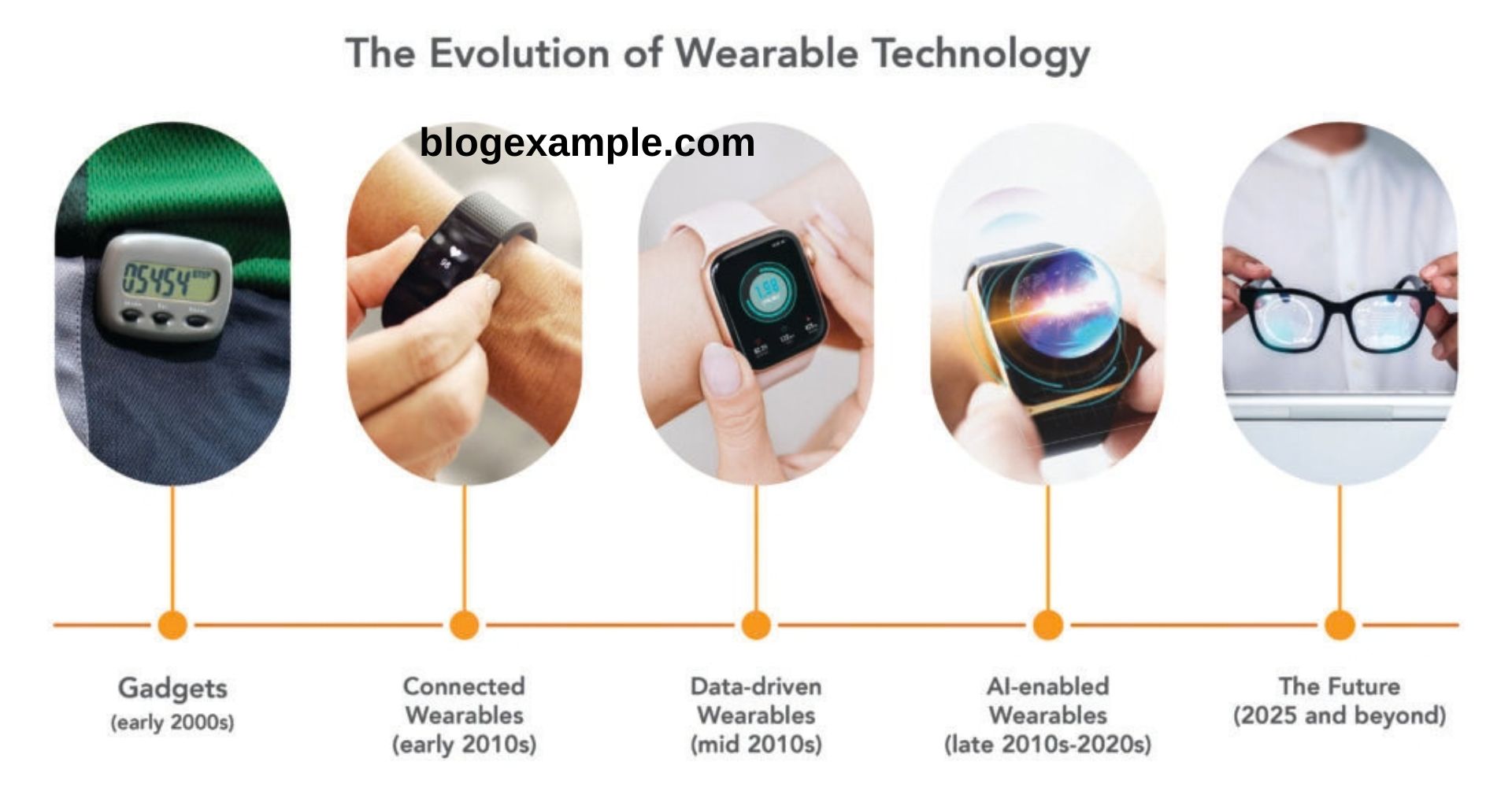
Artificial intelligence is changing the wearable technology industry in 2026. Smartwatches, smart glasses, fitness trackers, earbuds, rings, and other connected devices are becoming more than simple tools for tracking steps, checking notifications, or monitoring basic activity. AI wearables are increasingly designed to understand users, process information, provide useful recommendations, and respond naturally to everyday needs.
The combination of AI, advanced sensors, faster processors, and cloud connectivity is creating a new generation of smart devices. Instead of simply collecting data, these devices can interpret information and turn it into personalized insights. This shift could make wearable technology more useful at work, during exercise, while traveling, and throughout daily life.
Read More: Game Bài H19: Choosing Card Games, Learning Rules, and Building Better Table Habits
What Are AI Wearables?
AI wearables are wearable electronic devices that use artificial intelligence to analyze information and deliver intelligent responses or recommendations. They include products such as smartwatches, smart rings, AI-powered glasses, intelligent earbuds, fitness trackers, and emerging wearable assistants.
Traditional wearable devices mainly focus on collecting data. A fitness tracker might count steps, while a smartwatch could record exercise sessions or display notifications. AI wearables aim to go further by understanding patterns within that information.
For example, an AI-powered wearable could recognize changes in a user’s activity patterns and provide personalized suggestions. Intelligent earbuds may improve voice interactions, while smart glasses can offer contextual information without requiring a smartphone.
The major difference is intelligence. Wearables are moving from passive data collection toward active assistance.
AI Is Making Wearables More Personalized
Personalization is one of the biggest developments in AI wearables in 2026. Artificial intelligence can analyze information collected over time and identify individual patterns.
Instead of giving every user the same recommendation, an intelligent wearable can potentially adapt its suggestions based on personal behavior. Exercise recommendations, sleep insights, reminders, and other features can become more relevant as the device learns from regular usage.
This creates a more customized experience.
For example, a smartwatch may recognize that a person usually becomes active at a certain time of day. Rather than simply displaying activity statistics, an AI system could organize information around that routine and provide useful suggestions.
Personalization also allows wearable companies to make their products feel more like digital assistants. The device does not simply wait for instructions. It can use available information to make interactions more useful.
Smartwatches Are Becoming AI Assistants
Smartwatches remain one of the most popular wearable categories, but their role is expanding.
Earlier smartwatches focused heavily on notifications, fitness tracking, calls, music controls, and basic applications. AI is helping manufacturers move toward more intelligent experiences.
AI-powered smartwatch features can analyze activity data, summarize information, assist with communication, and provide context-aware suggestions. Voice interaction is also becoming increasingly important because speaking to a watch can be more convenient than typing on a small screen.
AI can also make smartwatch interfaces easier to use. Instead of navigating through multiple menus, users may increasingly be able to describe what they want in natural language.
This could turn smartwatches into compact personal assistants that remain available throughout the day.
AI Glasses Could Become a Major Wearable Platform
Smart glasses are another important area of development.
AI-powered glasses can combine cameras, microphones, speakers, connectivity, and artificial intelligence in a wearable format. This allows users to interact with digital information while keeping their smartphones in their pockets.
One major advantage is hands-free interaction.
A user could potentially ask a question, identify an object, receive directions, translate text, or interact with an AI assistant through voice. Cameras can provide visual context, while AI systems interpret what the device sees.
This combination of vision and language could make smart glasses much more capable than earlier generations of wearable technology.
However, smart glasses also raise important questions about privacy, recording, data collection, and social acceptance. Their long-term success will depend not only on technical capabilities but also on how responsibly these technologies are designed.
AI Earbuds Are Becoming Smarter
Wireless earbuds have already evolved from simple audio accessories into multifunctional smart devices.
In 2026, AI is helping push this evolution further. Modern earbuds can potentially support voice assistants, noise management, language translation, communication features, and personalized audio experiences.
AI can analyze environmental sounds and adjust audio settings according to changing conditions. Intelligent systems can also improve voice recognition by separating speech from surrounding noise.
Another interesting development is real-time translation. AI-powered earbuds may help users communicate across language barriers by combining speech recognition, machine translation, and audio playback.
This could be particularly useful for travelers, international businesses, students, and people communicating across different languages.
Smart Rings Are Bringing AI to Smaller Devices
Smart rings demonstrate how wearable technology is becoming smaller while remaining increasingly capable.
Smart rings can collect various forms of biometric and activity information without the larger size of a smartwatch. Their small design makes them attractive to users who prefer less noticeable wearable devices.
AI can analyze long-term patterns from the collected information and present simplified insights. Rather than requiring users to examine numerous statistics, intelligent software can organize the data into understandable trends.
This approach highlights an important direction for wearable technology: collecting more information while making the user experience simpler.
On-Device AI Is Becoming More Important
One of the most important technological trends in AI wearables is the growing use of on-device AI.
Traditionally, many AI tasks depend heavily on cloud computing. Data is sent to remote servers, processed, and returned to the device. While this approach can provide powerful computing capabilities, it can also introduce delays and privacy concerns.
On-device AI allows some processing to happen directly on the wearable.
Modern chips are becoming more capable of handling AI workloads while using less energy. This means wearable devices can potentially perform certain intelligent tasks without constantly depending on a remote server.
Faster responses, improved privacy, and reduced connectivity requirements are major advantages.
Battery efficiency remains a major challenge, however. Wearable devices are small, so manufacturers must balance AI performance with power consumption.
AI and Health Monitoring
Health and wellness remain major reasons people purchase wearable technology.
AI can help analyze large amounts of information collected by sensors. Instead of simply presenting numbers, intelligent systems can identify patterns and provide easier-to-understand summaries.
Sleep tracking is a strong example. A wearable can collect information throughout the night and use algorithms to identify patterns related to sleep duration and different sleep stages.
Fitness tracking can also benefit from AI. Intelligent systems can analyze exercise patterns and help users understand their progress.
However, wearable insights should not automatically be treated as medical diagnoses. Consumers need to understand the difference between wellness technology and professional medical care.
AI Wearables Are Changing Fitness
Fitness technology is becoming increasingly personalized through AI.
Traditional fitness trackers often provide statistics such as distance, steps, calories, and workout duration. AI can turn these measurements into more meaningful insights.
An intelligent wearable could potentially recognize exercise patterns, compare current performance with previous activity, and suggest adjustments.
AI can also help users understand long-term trends rather than focusing on a single workout.
For athletes and everyday fitness users, this can make wearable data easier to interpret. Instead of studying multiple charts, users can receive concise explanations of what their data may indicate.
Wearables Are Becoming More Context-Aware
Context awareness is another important trend in 2026.
A smart device can become more useful when it understands what is happening around the user. Location, movement, time, audio, visual information, and user activity can all contribute to contextual understanding.
For example, a wearable might recognize that the user is exercising, traveling, working, or having a conversation and adjust its behavior accordingly.
This moves wearable technology toward ambient computing, where technology works quietly in the background instead of requiring constant interaction.
The goal is not simply to add more features. The goal is to make technology feel more natural.
Privacy Is a Major Challenge
The rapid growth of AI wearables also creates serious privacy concerns.
Wearable devices can collect highly personal information, including movement patterns, voice data, biometric information, location information, and potentially visual information.
AI makes this data more valuable because algorithms can identify patterns that may not be obvious from individual data points.
Companies therefore need strong security and transparent privacy policies. Users should understand what information a wearable collects, where it is processed, how long it is stored, and whether it is shared with other services.
Privacy will become an increasingly important factor when consumers choose AI-powered devices.
Battery Life Remains a Technical Problem
More intelligence usually requires more computing power, and more computing can require more energy.
This creates a major challenge for wearable manufacturers.
A smartphone can accommodate a relatively large battery, but a ring, earbud, or lightweight pair of glasses has far less physical space.
Companies are responding through more efficient processors, specialized AI hardware, improved software, and smarter power management.
The future of AI wearables will depend partly on solving this efficiency problem. Users want powerful features, but they also expect devices to work throughout the day without frequent charging.
AI Wearables and the Future of Work
AI wearables could also change professional environments.
Smart glasses may provide hands-free instructions for technicians, engineers, warehouse workers, and other professionals. Voice-enabled wearables could make it easier to access information without stopping a task.
Meetings could also become more intelligent through AI-powered transcription, summaries, and information retrieval.
However, workplaces will need clear policies concerning privacy, employee monitoring, data security, and consent.
The technology has strong potential, but responsible implementation will be essential.
The Role of Smartphones May Change
AI wearables are unlikely to completely replace smartphones in the immediate future. Instead, they may change how people use them.
Many simple tasks could move from smartphones to wearable devices. Checking information, responding to short messages, controlling music, asking questions, and receiving reminders can often be handled through a watch, glasses, or earbuds.
This could create a more distributed digital experience.
The smartphone may remain the central device for demanding tasks, while wearables become convenient access points for AI services.
The AI Wearable Market Is Becoming More Competitive
Technology companies are investing heavily in artificial intelligence and wearable hardware. Established smartwatch manufacturers, smartphone companies, audio brands, and emerging startups are exploring new ways to combine AI with wearable devices.
Competition could accelerate innovation and reduce the cost of advanced features over time.
The biggest winners may be companies that successfully combine hardware, software, AI models, sensors, battery efficiency, and privacy protection into a seamless experience.
Simply adding an AI chatbot to a wearable may not be enough. Successful products will need to solve real problems.
What Consumers Can Expect
Consumers can expect AI wearables to become more capable, personalized, and connected.
Future devices may better understand voice commands, recognize surroundings, summarize personal information, provide contextual recommendations, and work across multiple devices.
The user experience could become simpler even as the technology underneath becomes more sophisticated.
This is an important principle for the wearable industry: advanced technology should reduce complexity rather than create it.
Frequently Asked Questions
What are AI wearables?
AI wearables are smart devices such as watches, glasses, earbuds, and rings that use artificial intelligence to analyze data and provide personalized assistance.
How are AI wearables becoming smarter in 2026?
AI wearables are becoming smarter through improved processors, advanced sensors, on-device AI, voice recognition, personalization, and better contextual understanding.
What devices use AI technology?
Smartwatches, smart glasses, wireless earbuds, smart rings, fitness trackers, and other connected wearable devices are increasingly using AI technology.
Can AI wearables monitor health?
AI wearables can track various wellness and fitness measurements and identify patterns. However, their insights should not automatically be considered medical diagnoses.
Are AI smart glasses useful?
AI smart glasses can provide hands-free access to information, voice assistants, visual recognition, translation, navigation, and other AI-powered features.
What are the benefits of AI wearables?
Major benefits include personalization, hands-free interaction, health and fitness insights, contextual assistance, improved accessibility, and convenient access to information.
Do AI wearables need the internet?
Some AI features require an internet connection, while on-device AI can allow certain tasks to work directly on the wearable without constant cloud access.
What is the biggest challenge for AI wearables?
Battery life, privacy, data security, device size, AI accuracy, and user trust are among the biggest challenges facing AI wearable technology.
Will AI wearables replace smartphones?
AI wearables are more likely to complement smartphones than completely replace them. They can handle many simple tasks while smartphones remain useful for more demanding activities.
What is the future of AI wearables?
The future is likely to include more personalized, context-aware, energy-efficient, and intelligent devices that provide assistance with less direct user interaction.
Conclusion
AI wearables in 2026 represent a significant shift in the evolution of smart devices. Smartwatches, glasses, earbuds, and rings are becoming more intelligent through advanced processors, AI models, sensors, and personalized software.
The biggest change is the move from data collection to intelligent assistance. Instead of simply recording what users do, wearable devices are increasingly designed to understand patterns and provide useful information.
At the same time, challenges involving privacy, security, battery life, accuracy, and responsible AI remain important. The future of wearable technology will depend on how effectively companies balance innovation with user trust.
As AI continues to become smaller, faster, and more efficient, smart devices could become an increasingly natural part of everyday life. AI wearables may not replace smartphones entirely, but they are likely to become an important layer of the next generation of personal technology.
