

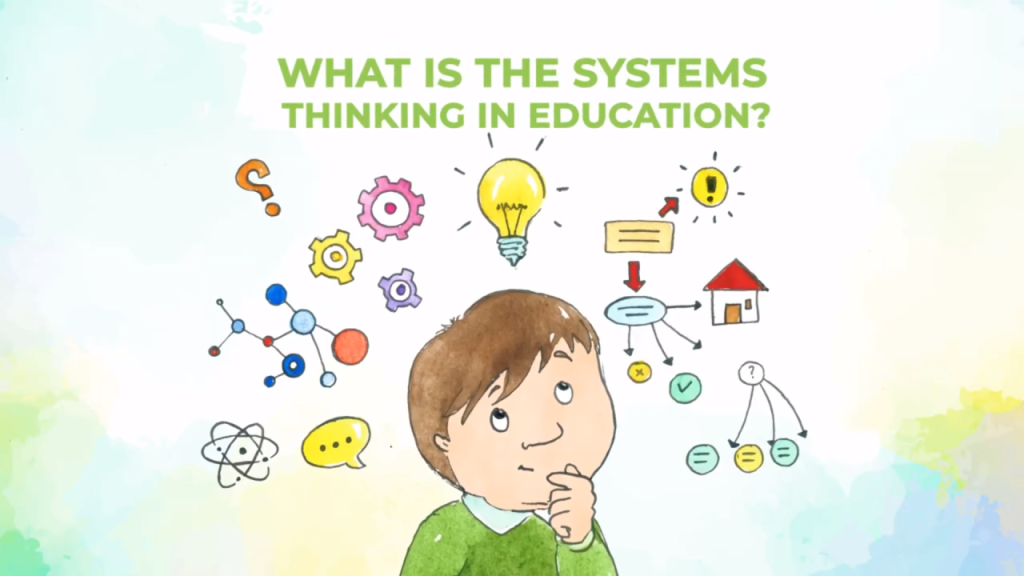
For decades, biology education has relied on a clear, linear approach: gene A turns into protein B, which controls process C. This step-by-step method works well for introducing basic concepts, but when applied to cancer — a disease defined by change, feedback, and adaptation — it quickly falls short. Cancer does not operate in straight lines. It is a dynamic system shaped by interactions between genetics, epigenetics, the tumor microenvironment, the immune system, and therapy itself.
As we prepare the next generation of scientists and clinicians, we must help them think in systems, not silos. That means moving beyond the idea of single pathways and encouraging students to embrace complexity, uncertainty, and interaction. It is not always easy to teach or learn this way, but it is essential for solving real-world problems in cancer biology and medicine.
Why Linear Thinking Isn’t Enough
Linear models are attractive because they are simple and easy to visualize. A mutation leads to a malfunctioning protein. A targeted drug blocks that protein and stops tumor growth. These models are clean and logical, but they often fail to predict what actually happens in patients.
In reality, cancer cells adapt. When one pathway is blocked, others may become activated. When one group of cells dies, others may take over with different traits. The tumor evolves under pressure, just like a living ecosystem.
In education, if we stop at linear diagrams, we risk training students to oversimplify problems. They may memorize pathways without understanding how those pathways interact or change over time. They may be surprised when treatments that work in cell lines do not work in real patients. They may miss opportunities to connect discoveries across disciplines.
To change this, we need to teach complexity early and often — not as a confusing obstacle, but as a natural part of biological systems.
Cancer as a Dynamic System
Cancer is a perfect example of systems biology in action. It is not just a disease of genes. It involves multiple layers of regulation, all influencing each other.
- Genetics: Mutations in oncogenes or tumor suppressors set the stage for abnormal growth.
- Epigenetics: Chemical modifications silence or activate genes without altering DNA, often in response to environmental or hormonal changes.
- Microenvironment: Cancer cells interact with fibroblasts, immune cells, blood vessels, and extracellular matrix, all of which influence tumor behavior.
- Immune response: Tumors can suppress immune surveillance or hijack immune signals to support their own survival.
- Treatment pressure: Every drug we use imposes selective pressure, driving evolution within the tumor and shaping which cells survive.
These components are not isolated. They communicate, adapt, and co-evolve. Teaching this interconnectedness helps students appreciate both the challenges and the opportunities in cancer research.
How to Teach Systems Thinking in the Lab
In Chun Ju Chang’s lab at China Medical University, students are trained to see breast cancer not just as a genetic disease but as a plastic and evolving system. Her research on how epigenetic regulators like TET2 influence hormone receptor expression shows how subtle shifts in gene regulation can reshape the entire identity of a cell. These changes do not happen in isolation. They are affected by treatment, inflammation, and microenvironmental cues.
In mentoring students, Dr. Chang emphasizes that experimental results are rarely final. A failed experiment might mean a new interaction is at play. A surprising result might point to a system-level feedback loop. By encouraging students to ask why something happened — not just what happened — she cultivates a mindset that values connections over conclusions.
Labs are the perfect place to practice systems thinking. Students can learn how changing one variable affects others. They can design experiments that test interactions rather than single effects. They can work in interdisciplinary teams, learning from colleagues in bioinformatics, pharmacology, or immunology. Most importantly, they can get comfortable with the fact that biology is often nonlinear and unpredictable.
Teaching Tools That Encourage Complexity
Textbooks and lectures are necessary, but they often present information in fixed, segmented formats. To teach systems thinking, we need tools that show relationships and real-world dynamics.
- Network maps: Instead of linear pathways, students can explore interaction networks that show how genes, proteins, and signals affect each other in different contexts.
- Case studies: Real patient cases can illustrate how one mutation interacts with therapy, immune response, and tumor microenvironment over time.
- Simulation tools: Digital models can help students visualize how small changes ripple through systems. These tools are especially useful for modeling resistance and clonal evolution.
- Journal clubs and critical reading: Discussing papers that include systems-level insights encourages students to think about broader implications and hidden connections.
- Cross-disciplinary learning: Courses that combine biology with systems engineering, data science, or ecology help students borrow ideas from other complex fields.
These tools do not replace foundational knowledge. Instead, they help students apply what they know in flexible and integrative ways.
Cultivating a Mindset of Exploration
Systems thinking is not just a teaching method. It is a mindset. It requires curiosity, patience, and the willingness to be wrong. It values patterns over parts and encourages learners to explore rather than memorize.
One way to support this mindset is by creating safe environments for asking questions and challenging assumptions. Students should feel comfortable suggesting interactions that are not yet proven. They should be encouraged to explore unexpected findings rather than discard them.
Educators can also model this mindset by sharing how their own thinking has evolved. When mentors like Chun Ju Chang describe how a single unexpected result led to a new research direction, students see how open-ended thinking leads to discovery.
The Future Needs Systems Thinkers
Cancer research is moving toward more personalized, data-rich, and interconnected approaches. Therapies are increasingly based on combinations, not single agents. Diagnostics involve multi-omic profiling rather than one biomarker. And research teams include molecular biologists, clinicians, computer scientists, and statisticians.
To thrive in this environment, tomorrow’s scientists must think beyond single genes or pathways. They must understand how small changes affect whole systems. They must recognize that cancer is not a single event but a moving target that reacts to every intervention.
Teaching complexity does not mean confusing students. It means preparing them for reality. By guiding them to see the beauty in interaction, the value in nuance, and the power of integration, we equip them to tackle cancer not just with knowledge, but with vision.
